

OFDM promises compact Terabit transceivers
 Source ECI Telecom
A one Terabit super-channel, crafted using orthogonal frequency-division multiplexing (OFDM), has been transmitted over a live network in Germany. The OFDM demonstration is the outcome of a three-year project conducted by the Tera Santa Consortium comprising Israeli companies and universities.
Current 100 Gig coherent networks use a single carrier for the optical transmission whereas OFDM imprints the transmitted data across multiple sub-carriers. OFDM is already used as a radio access technology, the Long Term Evolution (LTE) cellular standard being one example.
With OFDM, the sub-carriers are tightly packed with a spacing chosen to minimise the interference at the receiver. OFDM is being researched for optical transmission as it promises robustness to channel impairments as well as implementation benefits, especially as systems move to Terabit speeds.
"It is clear that the market has voted for single-carrier transmission for 400 Gig," says Shai Stein, chairman of the Tera Santa Consortium and CTO of system vendor, ECI Telecom. "But at higher rates, such as 1 Terabit, the challenge will be to achieve compact, low-power transceivers."

The real contribution [of OFDM] is implementation efficiency
Shai Stein
One finding of the project is that the OFDM optical performance matches that of traditional coherent transmission but that the digital signal processing required is halved. "The real contribution [of OFDM] is implementation efficiency," says Stein.
For the trial, the 175GHz-wide 1 Terabit super-channel signal was transmitted through several reconfigurable optical add/drop multiplexer (ROADM) stages. The 175GHz spectrum comprises seven, 25GHz bands. Two OFDM schemes were trialled: 128 sub-carriers and 1024 sub-carriers across each band.
To achieve 1 Terabit, the net data rate per band was 142 Gigabit-per-second (Gbps). Adding the overhead bits for forward error corrections and pilot signals, the gross data rate per band is closer to 200Gbps.
The 128 or 1024 sub-carriers per band are modulated using either quadrature phase-shift keying (QPSK) or 16-quadrature amplitude modulation (16-QAM). One modulation scheme - QPSK or 16-QAM - was used across a band, although Stein points out that the modulation scheme can be chosen on a sub-carrier by sub-carrier basis, depending on the transmission conditions.
The trial took place at the Technische Universität Dresden, using the Deutsches Forschungsnetz e.V. X-WiN research network. The signal recovery was achieved offline using MATLAB computational software. "It [the trial] was in real conditions, just the processing was performed offline," says Stein. The MATLAB algorithms will be captured in FPGA silicon and added to the transciever in the coming months.
Using a purpose-built simulator, the Tera Santa Consortium compared the OFDM results with traditional coherent super-channel transmission. "Both exhibited the same performance," says David Dahan, senior research engineer for optics at ECI Telecom. "You get a 1,000km reach without a problem." And with hybrid EDFA-Raman amplification, 2,000km is possible. The system also demonstrated robustness to chromatic dispersion. Using 1024 sub-carriers, the chromatic dispersion is sufficient low that no compensation is needed, says ECI.
Stein says the project has been hugely beneficial to the Israeli optical industry: "There has been silicon photonics, transceiver and algorithmic developments, and benefits at the networking level." For ECI, it is important that there is a healthy local optical supply chain. "The giants have that in-house, we do not," says Stein.
One Terabit transmission will be realised in the marketplace in the next two years. Due to the project, the consortium companies are now well placed to understand the requirements, says Stein.
Set up in 2011, the Tera Santa Consortium includes ECI Telecom, Finisar, MultiPhy, Cello, Civcom, Bezeq International, the Technion Israel Institute of Technology, Ben-Gurion University, and the Hebrew University in Jerusalem, Bar-Ilan University and Tel-Aviv University.

ECI Telecom demos 100 Gigabit over 4,600km
- 4,600km optical transmission over submarine cable
- The Tera Santa Consortium, chaired by ECI, will show a 400 Gigabit/ 1 Terabit transceiver prototype in the summer
- 100 Gigabit direct-detection module on hold as the company eyes new technology developments
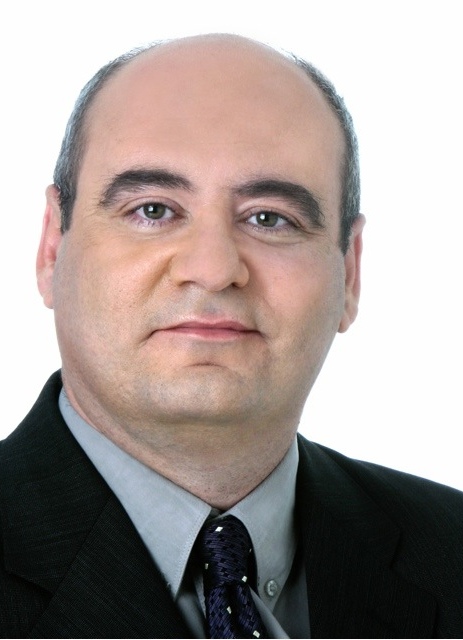 "When we started the project it was not clear whether the market would go for 400 Gig or 1 Terabit. Now it seems that the market will start with 400 Gig."
Jimmy Mizrahi, ECI Telecom
ECI Telecom has transmitted a 100 Gigabit signal over 4,600km without signal regeneration. Using Bezeq International's submarine cable between Israel and Italy, ECI sent the 100 Gigabit-per-second (Gbps) signal alongside live traffic. The Apollo optimised multi-layer transport (OMLT) platform was used, featuring a 5x7-inch MSA 100Gbps coherent module with soft-decision, forward error correction (SD-FEC).
"We set a target for the expected [optical] performance with our [module] partner and it was developed accordingly," says Jimmy Mizrahi, head of the optical networking line of business at ECI Telecom. "The [100Gbps] transceiver has superior performance; we have heard that from operators that have tested the module's capabilities and performance."
One geography that ECI serves is the former Soviet Union which has large-span networks and regions of older fibre.
Tera Santa Consortium
ECI used the Bezeq trial to also perform tests as part of the Tera Santa Consortium project involving Israeli optical companies and universities. The project is developing a transponder capable of 400 Gigabit and 1 Terabit rates. The project is funded by seven participating firms and the Israeli Government.
"When we started the project it was not clear whether the market would go for 400 Gig or 1 Terabit,” says Mizrahi. “Now it seems that the market will start with 400 Gig."
The Tera Santa Consortium expects to demonstrate a 1 Terabit prototype in August and is looking to extend the project a further three years.
100 Gigabit direct detection
In 2012 ECI announced it was working with chip company, MultiPhy, to develop a 100 Gigabit direct-detection module. The 100 Gigabit direct detection technology uses 4x28Gbps wavelengths and is a cheaper solution than 100Gbps coherent. The technology is aimed at short reach (up to 80km) links used to connect data centres, for example, and for metro applications.
“We have changed our priorities to speed up the [100Gbps] coherent solution,” says Mizrahi. “It [100Gbps direct detection] is still planned but has a lower priority.”
ECI says it is monitoring alternative technologies coming to market in the next year. “We are taking it slowly because we might jump to new technologies,” says Mizrahi. “The line cards will be ready, the decision will be whether to go for new technologies or for direct detection."
Mizrahi would not list the technologies but hinted they may enable cheaper coherent solutions. Such coherent modules would not need SD-FEC to meet the shorter reach, metro requirements. Such a module could also be pluggable, such as the CFP or even the CFP2, and use indium phosphide-based modulators.
“For certain customers pricing will always be the major issue,” says Mizrahi. “If you have a solution at half the price, they will take it.”
R&D: At home or abroad?
 Omer Industrial Park in the Negev, Israel - the location of ECI Telecom's latest R&D centre.
Chaim Urbach likes working at the Omer Industrial Park site. Normally located at ECI’s headquarters in Petah Tikva, he visits the Omer site - some 100km away - once or twice a week and finds he is more productive there. Urbach employs an open door policy and has fewer interruptions at the Omer site since engineers are focussed solely on R&D work.
ECI set up its latest R&D centre in May 2010 with a staff of ten. “In 2009 we realised we needed more engineers,” says Urbach. One year on the site employs 150, by the end of the year it will be 200, and by year-end 2012 the company expects to employ 300. ECI has already taken one unit at the Industrial Park and its operations have already spilt over into a second building.
Urbach says that the decision to locate the new site in the south of Israel was not straightforward.
The company has 1,300 R&D staff, with research centres in the US, India and China. Having a second site in Israel helps in terms of issues of language and time zones but employing an R&D engineer in Israel is several times more costly than an engineer in India or China.
 The photos on the wall are part of the winning entries in an ECI company-wide photo competition.
But the Israeli Government’s Office of the Chief Scientist (OCS) is keen to encourage local high-tech ventures and has helped with the funding of the site. In return the backed-venture must undertake what is deemed innovative research with the OCS guaranteed royalties from sales of future telecom systems developed at the site.
One difficulty Urbach highlights is recruiting experienced hardware and software engineers given that there are few local high-tech companies in the south of the country. Instead ECI has relocated experienced engineering managers from Petah Tikva, tasked with building core knowledge by training graduates from nearby Ben-Gurion University and from local colleges.
Work on the majority of ECI’s new projects in being done at the Omer site, says Urbach. Projects include developing GPON access technology for a BT tender as well as extending its successful XDM hybrid+ SDH to all-IP transport platform, which has over 30% market share in India. ECI is undertaking the research on one terabit transmission using OFDM technology, part of the Tera Santa Consortium, at its HQ.
 “We realised we needed more engineers”
Chaim Urbach, ECI Telecom
Urbach admits it is a challenge to compete with leading Far Eastern system vendors on cost and given their R&D budgets. But he says the company is focussed on building innovative platforms delivered as part of a complete solution. “We do not just provide a box,” says Urbach. “And customers know if they have a problem, we go the extra mile to solve it.”
 Omer Industrial Park
The company is highly business oriented, he says, delivering solutions that fit customers’ needs. “Over 95% of all systems ECI has developed have been sold,” he says.
Urbach also argues that Israeli engineers are suited to R&D. “Engineers don’t do everything by the book,” he says. “And they are dedicated and motivated to succeed.”
For more photos of the Omer Industrial Park, click here
Terabit Consortium embraces OFDM
 “This project is very challenging and very important”
Shai Stein, Tera Santa Consortium
Given the continual growth in IP traffic, higher-speed light paths are going to be needed, says Shai Stein, chairman of the Tera Santa Consortium and ECI Telecom’s CTO: “If 100 Gigabit is starting to be deployed, within five years we’ll start to see links with tenfold that capacity, meaning one Terabit.”
The project is funded by the seven participating firms and the Israeli Government. According to Stern, the Government has invested little in optical projects in recent years. “When we look at the [Israeli] academies and industry capabilities in optical, there is no justification for this,” says Stern. “We went with this initiative in order to get Government funding for something very challenging that will position us in a totally different place worldwide.”
Orthogonal frequency division multiplexing
OFDM differs from traditional dense wavelength division multiplexing (DWDM) technology in how fibre bandwidth is used. Rather than sending all the information on a lightpath within a single 50 or 100GHz channel – dubbed single-carrier transmission – OFDM uses multiple narrow carriers. “Instead of using the whole bandwidth in one bulk and transmitting the information over it, [with OFDM] you divide the spectrum into pieces and on each you transmit a portion of the data,” says Stein. “Each sub-carrier is very narrow and the summation of all of them is the transmission.”
“Each time there is a new arena in telecom we find that there is a battle between single carrier modulation and OFDM; VDSL began as single carrier and later moved to OFDM,” says Amitai Melamed, involved in the project and a member of ECI’s CTO office. “In the optical domain, before running to [use] single-carrier modulation as is currently done at 100 Gigabit, it is better to look at the OFDM domain in detail rather than jump at single-carrier modulation and question whether this was the right choice in future.”
OFDM delivers several benefits, says Stern, especially in the flexibility it brings in managing spectrum. OFDM allows a fibre’s spectrum band to be used right up to its edge. Indeed Melamed is confident that by adopting OFDM for optical, the spectrum efficiency achieved will eventually match that of wireless.
“OFDM is very tolerant to rate adaptation.”
Amitai Melamed, ECI Telecom
The technology also lends itself to parallel processing. “Each of the sub-carriers is orthogonal and in a way independent,” says Stern. “You can use multiple small machines to process the whole traffic instead of a single engine that processes it all.” With OFDM, chromatic dispersion is also reduced because each sub-carrier is narrow in the frequency domain.
Using OFDM, the modulation scheme used per sub-carrier can vary depending on channel conditions. This delivers a flexibility absent from existing single-carrier modulation schemes such as quadrature phase-shift keying (QPSK) that is used across all the channel bandwidth at 100 Gigabit-per-second (Gbps). “With OFDM, some of the bins [sub-carriers] could be QPSK but others could be 16-QAM or even more,” says Melamed.
The approach enables the concept of an adaptive transponder. “I don’t always need to handle fibre as a time-division multiplexed link – either you have all the capacity or nothing,” says Melamed. “We are trying to push this resource to be more tolerant to the media: We can sense the channels' and adapt the receiver to the real capacity.” Such an approach better suits the characteristics of packet traffic in general he says: “OFDM is very tolerant to rate adaptation.”
The Consortium’s goal is to deliver a 1 Terabit light path in a 175GHz channel. At present 160, 40Gbps can be crammed within the a fibre's C-band, equating to 6.4Tbps using 25GHz channels. At 100Gbps, 80 channels - or 8Tbps - is possible using 50GHz channels. A 175GHz channel spacing at 1Tbps would result in 23Tbps overall capacity. However this figure is likely to be reduced in practice since frequency guard-bands between channels are needed. The spectrum spacings at speeds greater than 100Gbps are still being worked out as part of ITU work on "gridless" channels (see OFC announcements and market trends story).
ECI stresses that fibre capacity is only one aspect of performance, however, and that at 1Tbps the optical reach achieved is reduced compared to transmissions at 100Gbps. “It is not just about having more Gigabit-per-second-per-Hertz but how we utilize the resource,” says Melamed. “A system with an adaptive rate optimises the resource in terms of how capacity is managed.” For example if there is no need for a 1Tbps link at a certain time of the day, the system can revert to a lower speed and use the spectrum freed up for other services. Such a concept will enable the DWDM system to be adaptive in capacity, time and reach.
Project focus
The project is split between digital and analogue, optical development work. The digital part concerns OFDM and how the signals are processed in a modular way.
The analogue work involves overcoming several challenges, says Stern. One is designing and building the optical functions needed for modulation and demodulation with the accuracy required for OFDM. Another is achieving a compact design that fits within an optical transceiver. Dividing the 1Tbps signal into several sub-bands will require optical components to be implemented as a photonic integrated circuit (PIC). The PIC will integrate arrays of components for sub-band processing and will be needed to achieve the required cost, space and power consumption targets.
Taking part in the project are seven Israeli companies - ECI Telecom, the Israeli subsidiary of Finisar, MultiPhy, Civcom, Orckit-Corrigent, Elisra-Elbit and Optiway- as well as five Israeli universities.
 Two of the companies in the Consortium
“There are three types of companies,” says Stern. “Companies at the component level – digital components like digital signal processors and analogue optical components, sub-systems such as transceivers, and system companies that have platforms and a network view of the whole concept.”
The project goal is to provide the technology enablers to build a terabit-enabled optical network. A simple prototype will be built to check the concepts and the algorithms before proceeding to the full 1Terabit proof-of-concept, says Stern. The five Israeli universities will provide a dozen research groups covering issues such as PIC design and digital signal processing algorithms.
Any intellectual property resulting from the project is owned by the company that generates it although it will be made available to any other interested Consortium partner for licensing.
Project definition work, architectures and simulation work have already started. The project will take between 3-5 years but it has a deadline after three years when the Consortium will need to demonstrate the project's achievements. “If the achievements justify continuation I believe we will get it [a funding extension],” says Stern. “But we have a lot to do to get to this milestone after three years.
Project funding for the three years is around US $25M, with the Israeli Office of the Chief Scientist (OCS) providing 50 million NIS (US $14.5M) via the Magnet programme, which ECI says is “over half” of the overall funding.
Further reading: