
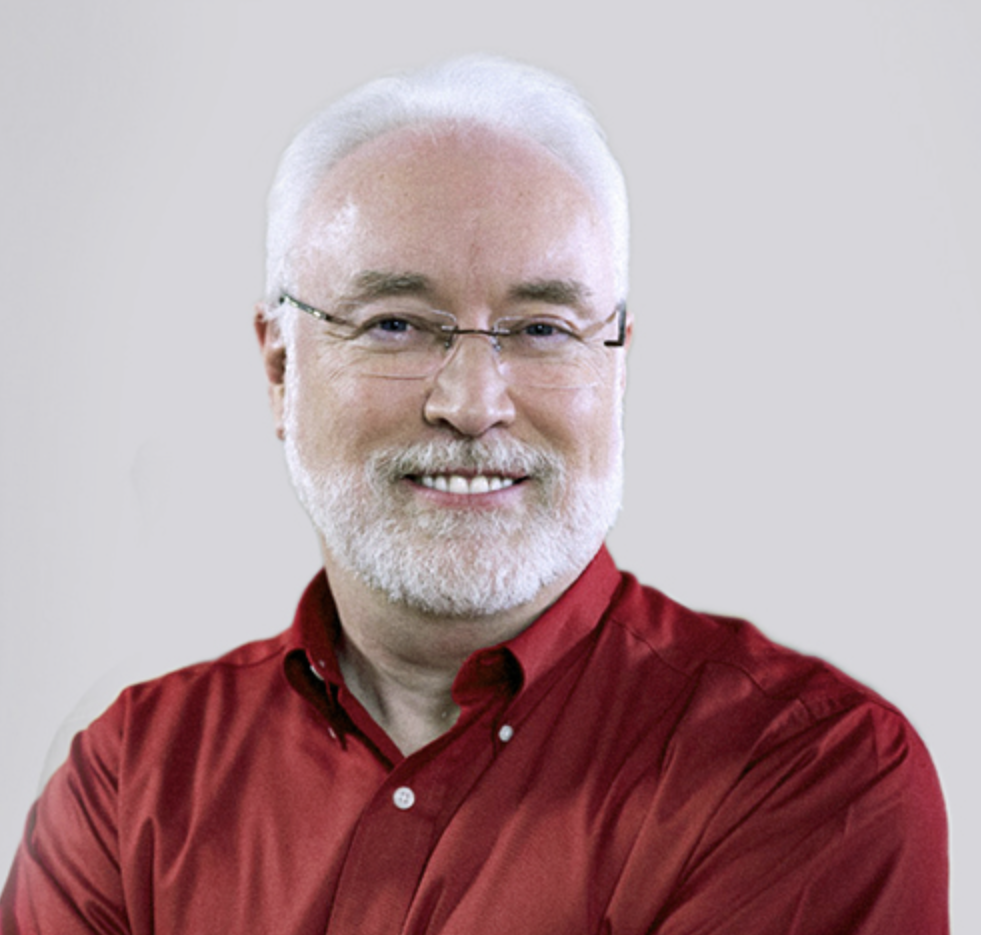
Steve Alexander's 30-Year Journey at Ciena
After three decades of shaping optical networking technology, Steve Alexander is stepping down as Ciena’s Chief Technology Officer (CTO).
His journey, from working on early optical networking systems to helping to implement AI as part of Ciena’s products, mirrors the evolution of telecommunications itself.
The farewell
“As soon as you say, ‘Hey guys, you know, there’s an end date’, certain things start moving,” says Alexander reflecting on his current transition period. “Some people want to say goodbye, others want more of your time.”
After 30 years of work, the bulk of it as CTO, Alexander is ready to reclaim his time, starting with the symbolic act of shutting down Microsoft Outlook.
“I don’t want to get up at six o’clock and look at my email and calendar to figure out my day,” he says.
His retirement plans blend the practical and the fun. The agenda includes long-delayed home projects and traveling with his wife. “My kids gave us dancing lessons for a Christmas present, that sort of thing,” he says with a smile.
Career journey
The emergence of the erbium-doped fibre amplifier shaped Alexander’s career.
The innovation sparked the US DARPA’s (Defense Advanced Research Projects Agency) interest in exploring all-optical networks, leading to a consortium of AT&T, Digital Equipment Corp., and MIT Lincoln Labs, where Alexander was making his mark.
“I did coherent in the late 80s and early 90s, way before coherent was cool,” he recalls. The consortium developed a 20-channel wavelength division multiplexing (WDM) test bed, though data rates were limited to around 1 Gigabit-per-second due to technology constraints.
“It was all research with components built by PhD students, but the benefits for the optical network were pretty clear,” he says.
The question was how to scale the technology and make it commercial.
A venture capitalist’s tip about a start-up working on optical amplifiers for cable TV led Alexander to Ciena in 1994, where he became employee number 12.
His first role was to help build the optical amplifier. “I ended up doing what effectively was the first kind of end-to-end link budget system design,” says Alexander. “The company produced its first product, took it out into the industry, and it’s been a great result since.”
The CTO role
Alexander became the CTO at Ciena at the end of the 1990s.
A CTO needs to have a technology and architecture mindset, he says, and highlights three elements in particular.
The first includes such characteristics as education and experience, curiosity, and imagination. Education is essential, but over time, it is interchangeable with experience. “They are fungible,” says Alexander.
Another aspect is curiosity, the desire to know how things work and why things are the way they are. Imagination refers to the ability to envisage something different from what it is now.
“One of the nicest things about the engineering skill set, whatever the field of engineering you’re in, is that with the right tools and team of people, once you have the idea, you can make it happen,” says Alexander.
Other aspects of the CTO’s role are talking, travelling, trouble-making, and tantrum throwing. “Trouble-making comes from the imagination and curiosity, wanting to do things maybe a little bit different than the status quo,” says Alexander.
And tantrums? “When things get really bad, and you just have to make a change, and you stomp your foot and pound the table,” says Alexander.
The third aspect a CTO needs is being in the “crow’s nest”, the structure at the top of a ship’s mast: “The guy looking out to figure out what’s coming: is it an opportunity? A threat? And how do we navigate around it,” says Alexander.
Technology and business model evolution
Alexander’s technological scope has grown over time, coinciding with the company’s expanding reach to include optical access and its Blue Planet unit.
“One of the reasons I stayed at the company for 30 years is that it has required a constant refresh,” says Alexander. “It’s a challenge because technology expands and goes faster and faster.”
His tenure saw the transformation from single-channel Sonet/ SDH to 16-channel WDM systems. But Alexander emphasizes that capacity wasn’t the only challenge.
“It’s not just delivering more capacity to more places, the business model of the service providers relies on more and more levels of intelligence to make it usable,” he says.
The gap between cloud operators’ agility and that of the traditional service providers became evident during Covid-19. “The reason we’re so interested in software and Blue Planet is changing that pretty big gap between the speed at which the cloud can operate and the speed at which the service provider can operate.”
Coherent optics
Ciena is shipping the highest symbol rate coherent modem, the WaveLogic 6 Extreme. This modem operates at up to 200 gigabaud and can send 1.6 terabits of data over a single carrier.
Alexander says coherent optics will continue to improve in terms of baud rate and optical performance. But he wonders about the desired direction the industry will take.
He marvels at the success of Ethernet whereas optical communications still has much to do in terms of standardization and interoperability.
There’s been tremendous progress by the OIF and initiatives such as 400ZR, says Alexander: “We are way better off than we were 10 years ago, but we’re still not at the point where it’s as ubiquitous and standardised as Ethernet.”
Such standardisation is key because it drives down cost.
“People have discussed getting on those Ethernet cost curves from the photonic side for years. But that is still a big hurdle in front of us,” he says.
AI’s growing impact
It is still early days for AI, says Alexander, but there are already glimmers of success. Longer term, the impact will likely be huge.
AI is already having an impact on software development and on network operations.
Ciena’s customers have started by looking to do simple things with AI, such as reconciling databases. Service providers have many such data stores: an inventory database, a customer database, a sales database, and a trouble ticket database.
“Sometimes you have a phone number here, an email there, a name elsewhere, things like a component ID, all these different things,” he says. ”If you can get all that reconciled into a consistent source of knowledge, that’s a huge benefit.”
Automation is another area that typically requires using multiple manual systems. There are also research papers appearing where AI is being used to design photonic components delivering novel optical performance.
AI will also impact the network. Humans may still be the drivers but it will be machines that do the bulk of the work and drive traffic.
“If you are going to centralize learning and distributed inferencing, it’s going to have to be closer to the end user,” says Alexander.
He uses a sports application as an example as to what could happen.
“If you’re a big soccer/ football fan, and you want to see every goal scored in every game that was broadcast anywhere in the world in the last 24 hours, ranked in a top-10 best goals listing, that’s an interesting task to give to a machine,” he says.
Such applications will demand unprecedented network capabilities. Data will need to be collected, and there will be a lot of machine-to-machine interactions to generate maybe a 10-minute video to watch.
“If you play those sorts of scenarios out, you can convince yourself that yes, networks are going to have lots of demand placed on them.”
Personal Reflection
While Alexander won’t miss his early morning Outlook checks, he’ll miss his colleagues and the laboratory environment.
A Ciena colleague, paying tribute to Alexander, describes him as being an important steward of Ciena’s culture. “He always has lived by the credo that if you care for your people, people will care for the company,” he says.
Alexander plans to keep up with technology developments, but he acknowledges that losing the inside view of innovation will be a significant change.
When people have asked him why he has stayed at Ciena, his always has answered the same way: “I joined Ciena for the technology but I stayed because of the people.”
Further Information
Ciena’s own tribute, click here

The Metaverse and the network
CTO interviews part 1: Stephen Alexander
“The inability to precisely predict how we’ll use it [the Metaverse], and how it will change our daily life, is not a flaw. Rather, it is a prerequisite for the Metaverse’s disruptive force.”
The Metaverse: And How it Will Revolutionize Everything by Matthew Ball, 2022.
CTO Interview
Stephen Alexander’s trusty 20-year-old dishwasher finally stopped working during the pandemic.
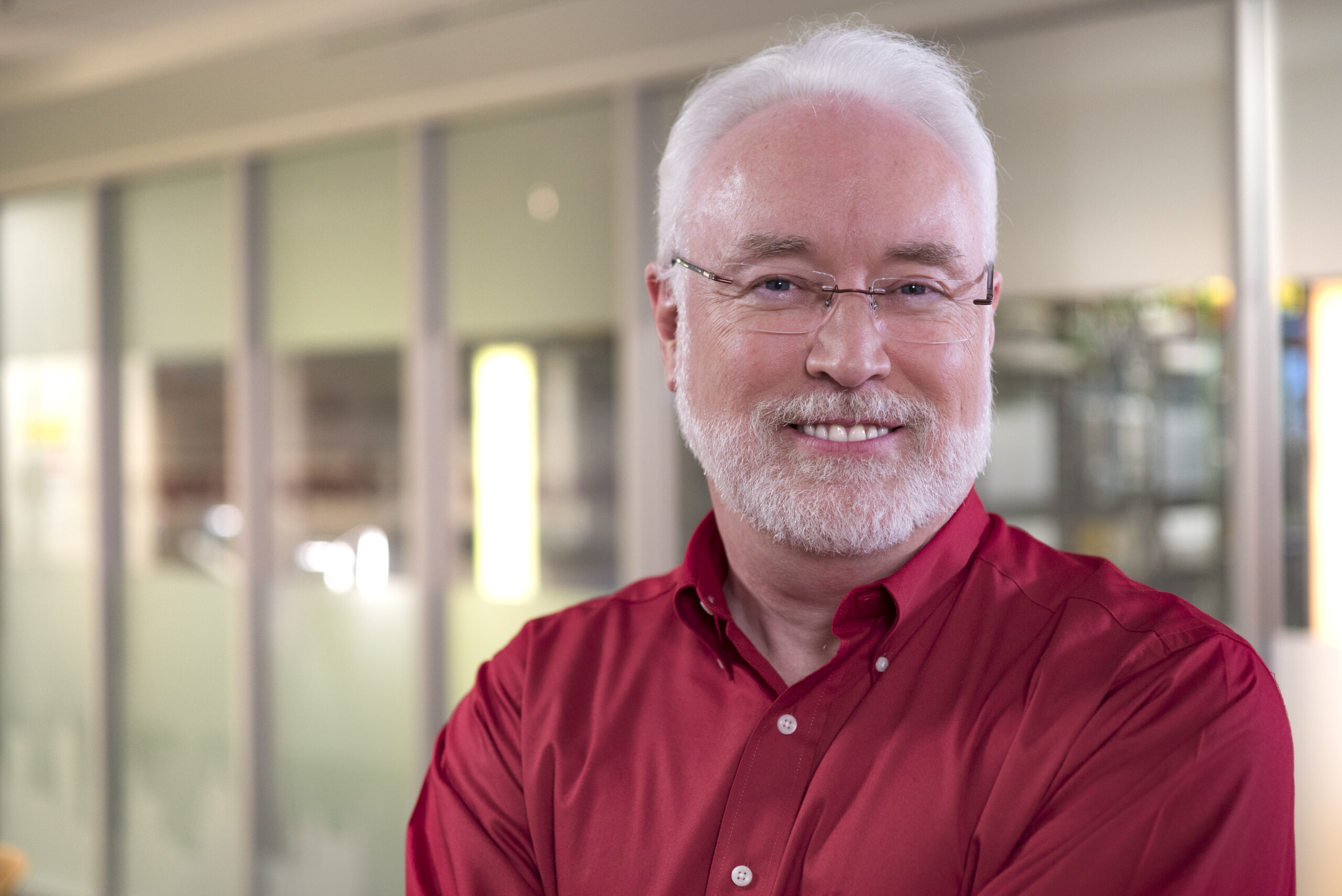
Unfortunately, getting spare parts shipped to the US was impossible, so Alexander, the CTO of Ciena (pictured), resorted to ‘how-to’ YouTube videos and got bits from eBay.
It highlighted the power of the online experience, something set to ramp significantly with the advent of the Metaverse.
The Metaverse refers to immersive virtual worlds where people will meet to socialise, learn, work and play.
During the pandemic, Ciena also experienced how the online experience can benefit work. The company used the network to guide remote data centre staff wearing virtual-reality headsets in operating its equipment.
Ciena also used high-resolution audio-visual equipment to continue development work during the pandemic. A solitary engineer in the lab would conduct measurements, sending the results to engineers working remotely.
“So we had started down this path where it [the Metaverse] is not just gaming but has got some interesting business applications,” says Alexander.
Metaverse survey
Ciena commissioned a recent survey on the Metaverse and its work uses. The systems vendor wanted to know how the customers of its customers view the emerging technology and how they would use it.
“What it [the Metaverse] represents for us is a use case,” says Alexander. “It’s an application space for this [networking] infrastructure we are all building.”
The study surveyed 15,000 people worldwide. Nearly all (96%) see the value of virtual meetings, while more than three-quarters (78%) say they would use more immersive experiences such as the Metaverse. However, two in five (38%) of the respondents said unreliable networking performance was a concern holding their organisations back.
Alexander, like many, spent his days in virtual meetings during the pandemic. In the mornings, he would talk to teams in Europe, in the middle of the day to the Americas, and in the evenings to the Asia Pacific. “It was a very efficient use of time,” he says.
But such tools are less effective for getting to know people. “You don’t have the ability to go to dinner, have coffee, go for a drink, that sort of thing,” he says.
Online meetings of up to 20 people are also limiting. Conversations are one-to-many unlike an in-person meeting where multiple parallel interactions occur.
“With a more immersive Metaverse environment where you have a virtual-reality capability, maybe we can start to do those things,” he says.
Alexander says that with the many areas of interactions, you can ask how many would be improved using augmented reality/ virtual reality.
Healthcare and education
Alexander experienced other benefits of online interactions, such as telemedicine, during the pandemic. But also some shortfalls. “What could have been done to improve the online education experience?” he says.
In a Metaverse-enabled world, education could enable high-school students to experience different types of work before deciding their career path. They could ‘join’ professionals – an airline pilot, a nurse, a doctor – to experience their working day.
“You plop on the headset, or you go into your ‘holodeck’ or advanced zoom environment and spend some hours or a day experiencing what that person’s life is like and what they do,” says Alexander. “That’s a huge educational potential enabled by this augmented reality/ virtual reality-enhanced world.”
Takeaways
One takeaway from Ciena’s commissioned survey is how widespread the acceptance of this future development is, says Alexander. There is also a broad interest in using the Metaverse for business applications.
The survey also highlighted some intriguing ideas.
Alexander says he looks forward to catching up with a former work colleague, but that this rarely happens due to their day-to-day commitments.
“You can imagine this world where his avatar and my avatar run into each other, and they talk about what’s going on in their lives and all the other things,” says Alexander. “And they come back, and we get a download from the evening.”
Network upshot
Alexander says that for some years, he has been saying that the network must get faster, the cloud has to get closer to the network edge, and infrastructure must get more intelligent.
These trends will benefit the Metaverse.
Latency is one crucial networking performance parameter.
Any end-device connected to the cloud has specific requirements regarding how it interacts and the latency it needs. For example, a latency of 100ms is ok when watching streaming video, but for gaming, that is too long; a headset requires a latency in the tens of milliseconds. Controlling an automated forklift truck is even more demanding. Here, tolerable latency is in single-digit milliseconds.
“That tells you, in some sense, where the edge of the cloud has to be,” says Alexander. “It just says that from the device to the cloud and back, it better be a certain physical distance as there is the speed of light issue.”
Network capacity also plays a role if the edge device generates enormous amounts of data – a petabyte, for example – and there is a timeliness to receiving an answer, even if it is a yes or no.
What network endpoints generate such massive amounts of data?
Alexander cites the example of synthesised designer drugs based on a person’s human genome. “If you have cancer, knowing that and getting the drug today, this week, this month is a whole lot different than getting it next year,” he says.
Other examples driving bandwidth he cites include military and agriculture (crops and livestock) applications.
“This is why this kind of a survey is so useful to us because we can go to our customers, whether they be cloud hyper-giants or to service providers and have a conversation about not what they are provisioning today, but what they’re going to provision in two to five years,” says Alexander.
This helps Ciena have better conversations with its customers about what they will need and should consider.
Planning
Staff at Ciena don’t yet have the word ‘Metaverse’ in their job titles.
Instead, staff are developing the next-generation WaveLogic coherent digital signal processor (DSP) family to drive the lowest cost-per-bit, highest capacity for fibre. Other Ciena employees are addressing network intelligence and automation; while others still are tackling routing, switching and the dynamic edge.
All applications require some flavour of these technologies, says Alexander.
The Metaverse is in its infancy in terms of use cases, with gaming being one prominant example.
“But you can imagine this can go for education, healthcare, and normal business interactions,” says Alexander. “It gets people’s juices flowing; look at the potential once we have high-capacity, low-latency connections to the cloud, and cloud is instantiated in enough local data centres that you can process things very quickly.”
Once that happens, people across industries will ask what they can do.
“That’s where you’re going to start to see the kind of the vectors of progress get established,” he says. “But common things that we see – capacity, connectivity, the ability to have a simpler, faster, more dynamic edge – those are key to enabling all this.”

Books in 2018 - Part 3
More books read in 2018, as recommended by Steve Alexander and Yves LeMaitre.
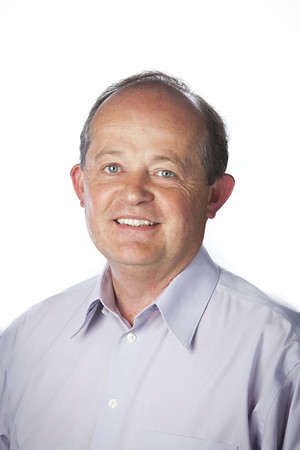
Steve Alexander, senior vice president and CTO, Ciena
I was standing in line at a Starbucks and was chatting with another person who asked what all these engineers were doing talking about networks of submarines. In fact, it was a nearby conference on submarine cables. The person said: “I thought that’s what satellites were for”.
I wanted to find a book I could point people to who think that satellites carry most of the international traffic when, in fact, it is the fibre-optic submarine cables that carry the vast majority of the world’s communications. I came up with The Undersea Network by Nicole Starosielski.
Our industry does such a good job at this that most people don’t even know such networks exist. It is like air; it is there and it works.
My youngest son read The Martian by Andy Weir after seeing the movie and he thought it was pretty good. I’ve always been a Sci-Fi fan but haven’t read much lately so it was nice to get back into it.
Yves LeMaitre, chief strategy officer at Lumentum
I am afraid I am guilty of spending far too much time streaming shows and sports to my laptop. The good thing is my TV stays off. However, I did manage to read several books this year. The three I would highlight - all non-fiction - have a focus on US history.
The first, Destiny of the Republic: A Tale of Madness, Medicine and the Murder of a President by Candice Millard, is about the presidency and assassination of James Garfield intertwined with several of the scientific inventions of the times.
Another title by Candice Millard that I recommend is The River of Doubt: Theodore Roosevelt’s Darkest Journey that details his exploration of the Amazon.
My third recommendation, The Devil in the White City: A Saga of Magic and Murder at the Fair that Changed America by Erik Larson, tells the story of the Chicago’s World Fair of 1893 combined with a serial killer story.
Reading about what are still relatively recent events highlights how much the world has changed in the last century while people’s aspirations and desires have not.
The life stories and achievements of Theodore Roosevelt, James Garfield and Daniel Burnham, the architect of the Chicago World’s Fair, should challenge us to expect more from our leadership, whether in the political, business or social arenas. We have become complacent in accepting mediocrity and lowering our standards.
Reading these stories should remind us that true leadership exists and is a rare quality that should be appreciated and recognised.

Books in 2013 - Part 2
Steve Alexander, CTO of Ciena
David and Goliath: Underdogs, Misfits, and the Art of Battling Giants by Malcolm Gladwell.
I’ve enjoyed some of Gladwell’s earlier works such as The Tipping Point and Outliers: The Story of Success. You often have to read his material with a bit of a skeptic's eye since he usually deals with people and events that are at least a standard deviation or two away from whatever is usually termed “normal.” In this case he makes the point that overcoming an adversity (and it can be in many forms) is helpful in achieving extraordinary results. It also reminded me of the many people who were skeptical about Ciena’s initial prospects back in the middle '90s when we first came to market as a “David” in a land of giant competitors. We clearly managed to prosper and have now outlived some of the giants of the day.
Overconnected: The Promise and Threat of the Internet by William Davidow.
I downloaded this to my iPad a while back and finally got to read it on a flight back from South America. On my trip what had I been discussing with customers? Improving network connections of course. I enjoyed it quite a bit because I see some of his observations within my own family. The desire to “connect” whenever something happens and the “positive feedback” that can result from an over-rich set of connections can be both quite amusing as well as a little scary! I don’t believe that all of the events that the author attributes to being overconnected are really as cause-and-effect driven as he may portray, but I found the possibilities for fads, market bubbles, and market collapses entertaining.
For another insight into such extremes see Extraordinary Popular Delusions and the Madness of Crowds by Charles Mackay, first published in the 1840s. We, as a species, have been a bit wacky for a long time.
Shadow Divers: The True Adventure of Two Americans Who Risked Everything to Solve One of the Last Mysteries of World War II by Robert Kurson.
Having grown up in the New York / New Jersey area and having listened to stories from my parents about the fear of sabotage in World War II (Google Operation Pastorius for some background) and grandparents, who had experienced the Black Tom Explosion during WW1, this book was a “don’t put it down till done” for me. I found it by accident when browsing a used book store. It’s available on Kindle and is apparently somewhat controversial because another diver has written a rebuttal to at least some of what was described. It is a great example of what it takes to both dive deep and solve a mystery.
David Welch, President, Infinera
Here is my cut. The first three books offer a perspective on how people think and I apply it to business.
- The Talent Code: Greatness Isn't Born. It's Grown. Here's How by Daniel Coyle.
- Mindset: The New Psychology of Success by Carol Dweck
- Moneyball: The Art of Winning an Unfair Game by Michael Lewis.
My non-work related book is Unbroken: A World War II Story of Survival, Resilience, and Redemption by Laura Hillenbrand.
Unfortunately, I rarely get time to read books, so the picking can be thin at times.
Marcus Weldon, President of Bell Labs and CTO, Alcatel-Lucent
I am currently re-reading Jon Gertner's history of Bell labs, called The Idea Factory: Bell Labs and the Great Age of American Innovation which should be no surprise as I have just inherited the leadership of this phenomenal place, and much of what he observes is still highly relevant today and will inform the future that I am planning.
I joined Bell Labs in 1995 as a post-doctoral researcher in the famous, Nobel-prize winning Physics Division (Div111, as it was known) and so experienced much of this first hand. In particular, I recall being surrounded by the most brilliant, opinionated, odd, inspired, collaborative, competitive, driven, relaxed, set of people I had ever met. And with the shared goal of solving the biggest problems in information and telecommunications.
Having recently returned back to the 'bosom of bell', I find that, remarkably, much of that environment and pool of talent still remains. And that is hugely exciting as it means that we still have the raw ingredients for the next great era of Bell Labs. My hope is that 10 years from now Gertner will write a second edition or updated version of the tale that includes the renewed success of Bell Labs, and not just the historical successes.
On the personal front, I am reading whatever my kids ask me to read them. Two of the current favourites are: Turkey Claus, about a turkey trying to avoid becoming the centrepiece of a Christmas feast by adapting and trying various guises, and Pete the Cat Saves Christmas, about a world of an ailing feline Claus, requiring average cat, Pete, to save the big day.
I am not sure there is a big message here, but perhaps it is that 'any one of us can be called to perform great acts, and can achieve them, and that adaptability is key to success'. And of course, there is some connection in this to the Bell Labs story above, so I will leave it there!
Books in 2013: Part 1, click here
Q&A: Ciena’s CTO on networking and technology
In Part 2 of the Q&A, Steve Alexander, CTO of Ciena, shares his thoughts about the network and technology trends.
Part 2: Networking and technology
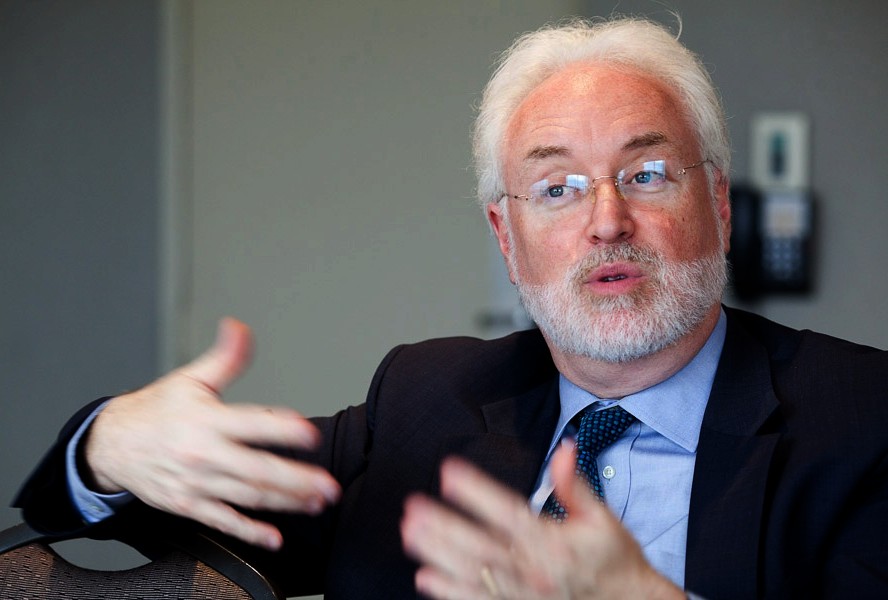
"The network must be a lot more dynamic and responsive"
Steve Alexander, Ciena CTO
Q. In the 1990s dense wavelength division multiplexing (DWDM) was the main optical development while in the '00s it was coherent transmission. What's next?
A couple of perspectives.
First, the platforms that we have in place today: III-V semiconductors for photonics and collections of quasi-discrete components around them - ASICs, FPGAs and pluggables - that is the technology we have. We can debate, based on your standpoint, how much indium phosphide integration you have versus how much silicon integration.
Second, the way that networks built in the next three to five years will differentiate themselves will be based on the applications that the carriers, service providers and large enterprises can run on them.
This will be in addition to capacity - capacity is going to make a difference for the end user and you are going to have to have adequate capacity with low enough latency and the right bandwidth attributes to keep your customers. Otherwise they migrate [to other operators], we know that happens.
You are going to start to differentiate based on the applications that the service providers and enterprises can run on those networks. I see the value of networking changing from a hardware-based problem-set to one largely software-based.
I'll give you an analogy: You bought your iPhone, I'll claim, not so much because it is a cool hardware box - which it is - but because of the applications that you can run on it.
The same thing will happen with infrastructure. You will see the convergence of the photonics piece and the Ethernet piece, and you will be able to run applications on top of that network that will do things such as move large amounts of data, encrypt large amounts of data, set up transfers for the cloud, assemble bandwidth together so you can have a good cloud experience for the time you need all that bandwidth and then that bandwidth will go back out, like a fluid, for other people to use.
That is the way the network is going to have to operate in future. The network must be a lot more dynamic and responsive.
How does Ciena view 40 and 100 Gig and in particular the role of coherent and alternative transmission schemes (direct detection, DQPSK)? Nortel Metro Ethernet Networks (MEN) was a strong coherent adherent yet Ciena was developing 100Gbps non-coherent solutions before it acquired MEN.
If you put the clock back a couple of years, where were the classic Ciena bets and what were the classic MEN bets?
We were looking at metro, edge of network, Ethernet, scalable switches, lots of software integration and lots of software intelligence in the way the network operates. We did not bet heavily on the long distance, submarine space and ultra long-haul. We were not very active in 40 Gig, we were going straight from 10 to 100 Gig.
Now look at the bets the MEN folks placed: very strong on coherent and applying it to 40 and 100 Gig, strong programme at 100 Gig, and they were focussed on the long-haul. Well, to do long-haul when you are running into things like polarisation mode dispersion (PMD), you've got to have coherent. That is how you get all those problems out of the network.
Our [Ciena's] first 100 Gig was not focussed on long-haul; it was focussed on how you get across a river to connect data centres.
When you look at putting things together, we ended up stopping our developments that were targeted at competing with MEN's long-haul solutions. They, in many cases, stopped developments coming after our switching, carrier Ethernet and software integration solutions. The integration worked very well because the intent of both companies was the same.
Today, do we have a position? Coherent is the right answer for anything that has to do with physical propagation because it simplifies networks. There are a whole bunch of reasons why coherent is such a game changer.
The reason why first 40 Gig implementations didn't go so well was cost. When we went from 10 to 40 Gig, the only tool was cranking up the clock rate.
At that time, once you got to 20GHz you were into the world of microwave. You leave printed circuit boards and normal manufacturing and move into a world more like radar. There are machined boxes, micro-coax and a very expensive manufacturing process. That frustrated the desires of the 40 Gig guys to be able to say: Hey, we've got a better cost point than the 10 Gig guys.
Well, with coherent the fact that I can unlock the bit rate from the baud rate, the signalling rate from the symbol rate, that is fantastic. I can stay at 10GHz clocks and send four-bits per symbol - that is 40Gbps.
My basic clock rate, which determines manufacturing complexity, fabrication complexity and the basic technology, stays with CMOS, which everyone knows is a great place to play. Apply that same magic to 100 Gig. I can send 100Gbps but stay at a 25GHz clock - that is tremendous, that is a huge economic win.
Coherent lets you continue to use the commercial merchant silicon technology base which where you want to be. You leverage the year-on-year cost reduction, a world onto itself that is driving the economics and we can leverage that.
So you get economics with coherent. You get improvement in performance because you simplify the line system - you can pop out the dispersion compensation, and you solve PMD with maths. You also get tunability. I'm using a laser - a local oscillator at the receiver - to measure the incoming laser. I have a tunable receiver that has a great economic cost point and makes the line system simpler.
Coherent is this triple win. It is just a fantastic change in technology.
What is Ciena’s thinking regarding bringing in-house sub-systems/ components (vertical integration), or the idea of partnerships to guarantee supply? One example is Infinera that makes photonic integrated circuits around which it builds systems. Another is Huawei that makes its own PON silicon.
The two examples are good ones.
With Huawei you have to treat them somewhat separately as they have some national intent to build a technology base in China. So they are going to make decisions about where they source components from that are outside the normal economic model.
Anybody in the systems business that has a supply chain periodically goes through the classic make-versus-buy analysis. If I'm buying a module, should I buy the piece-parts and make it? You go through that portion of it. Then you look within the sub-system modules and the piece-parts I'm buying and say: What if I made this myself? It is frequently very hard to say if I had this component fully vertically integrated I'd be better off.
A good question to ask about this is: Could the PC industry have been better if Microsoft owned Intel? Not at all.
You have to step back and say: Where does value get delivered with all these things? A lot of the semiconductor and component pieces were pushed out [by system vendors] because there was no way to get volume, scale and leverage. Unless you corner the market, that is frequently still true. But that doesn't mean you don't go through the make-versus-buy analysis periodically.
Call that the tactical bucket.
The strategic one is much different. It says: There is something out there that is unique and so differentiated, it would change my way of thinking about a system, or an approach or I can solve a problem differently.
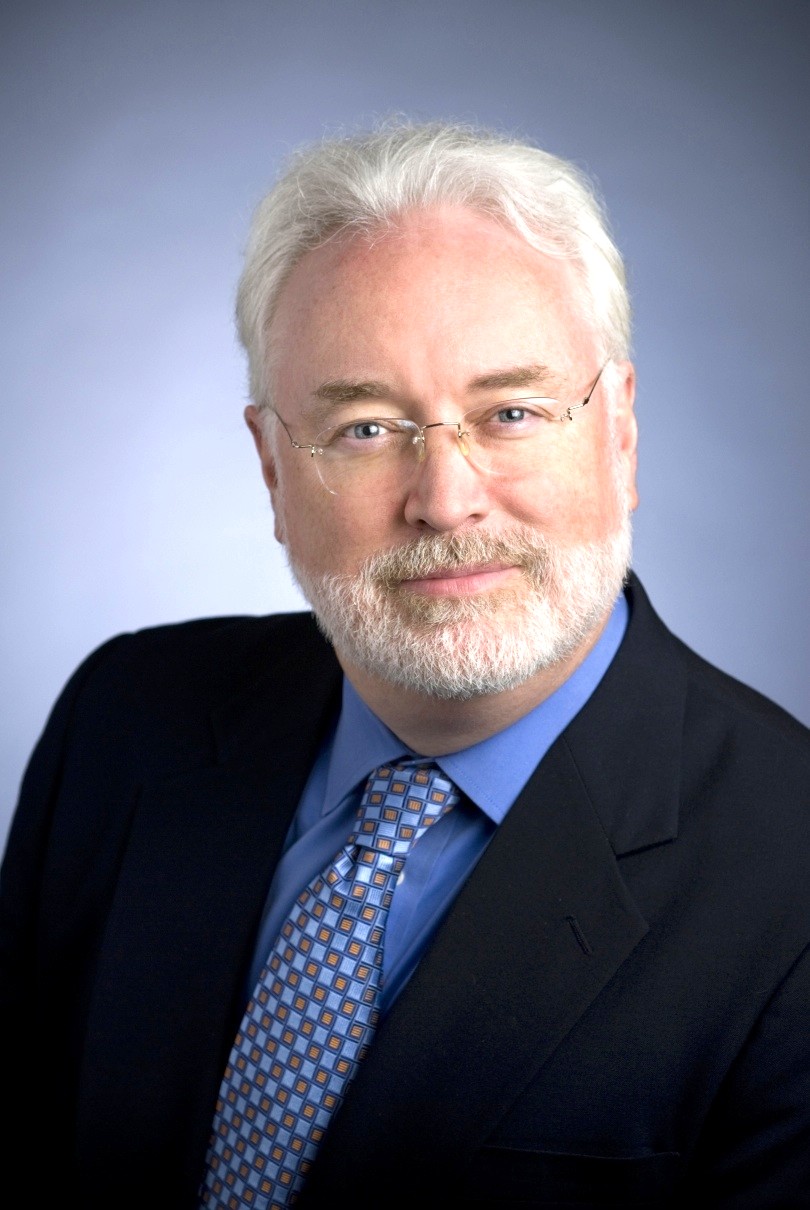
"Coherent is this triple win. It is just a fantastic change in technology"
If it is truly strategic and can make a real difference in the marketplace - not a 10% or 20% difference but a 10x improvement - then I think any company is obligated to take a really close look at whether it would be better being brought inside or entering into a good strategic partnership arrangement.
Certainly Ciena evaluates its relationships along these lines.
Can you cite a Ciena example?
Early when Ciena started, there was a technology at the time that was differentiated and that was Fibre Bragg Gratings. We made them ourselves. Today you would buy them.
You look at it at points in time. Does it give me differentiation? Or source-of-supply control? Am I at risk? Is the supplier capable of meeting my needs? There are all those pieces to it.
Optical Transport Network (OTN) integrated versus standalone products. Ciena has a standalone model but plans to evolve to an integrated solution. Others have an integrated product, while others still launched a standalone box and have since integrated. Analysts say such strategies confuse the marketplace. Why does Ciena believe its strategy is right?
Some of this gets caught up in semantics.
Why I say that is because we today have boxes that you would say are switches but you can put pluggable coloured optics in. Would you call that integrated probably depends more on what the competition calls it.
The place where there is most divergence of opinion is in the network core.
Normally people look at it and say: one big box that does everything would be great - that is the classic God-Box problem. When we look at it - and we have been looking at it on and off for 15 years now - if you try to combine every possible technology, there are always compromises.
The simplest one we can point to now: If you put the highest performance optics into a switch, you sacrifice switch density.
You can build switches today that because of the density of the switching ASICs, are I/O-port constrained: you can't get enough connectors on the face plate to talk to the switch fabric. That will change with time, there is always ebb and flow. In the past that would not have been true.
If I make those I/O ports datacom plugabbles, that is about as dense as I'm going to get. If I make them long-distance coherent optics, I'm not going to get as many because coherent optics take up more space. In some cases, you can end up cutting by half your port density on the switch fabric. That may not be the right answer for your network depending on how you are using that switch.
While we have both technologies in-house, and in certain application we will do that. Years ago we put coloured optics on CoreDirector to talk to CoreStream, that was specific for certain applications. The reason is that in most networks, people try to optimise switch density and transport capacity and these are different levers. If you bolt those levers together you don't often get the right optimal point.
Any business books you have read that have been particularly useful for your job?
The Innovator's Dilemma (by Clayton Christensen). What is good about it is that it has a couple of constructs that you can use with people so they will understand the problem. I've used some of those concepts and ideas to explain where various industries are, where product lines are, and what is needed to describe things as innovation.
The second one is called: Fad Surfing in the Boardroom (by Eileen Shapiro). It is a history of the various approaches that have been used for managing companies. That is an interesting read as well.
Click here for Part 1 of the Q&A
Q&A: Ciena’s CTO on R&D
Gazettabyte spoke with Steve Alexander, CTO of Ciena, about optical technology and R&D. In Part 1 of the Q&A, Alexander shares his thoughts about the practice and challenges of R&D.
Part 1: R&D
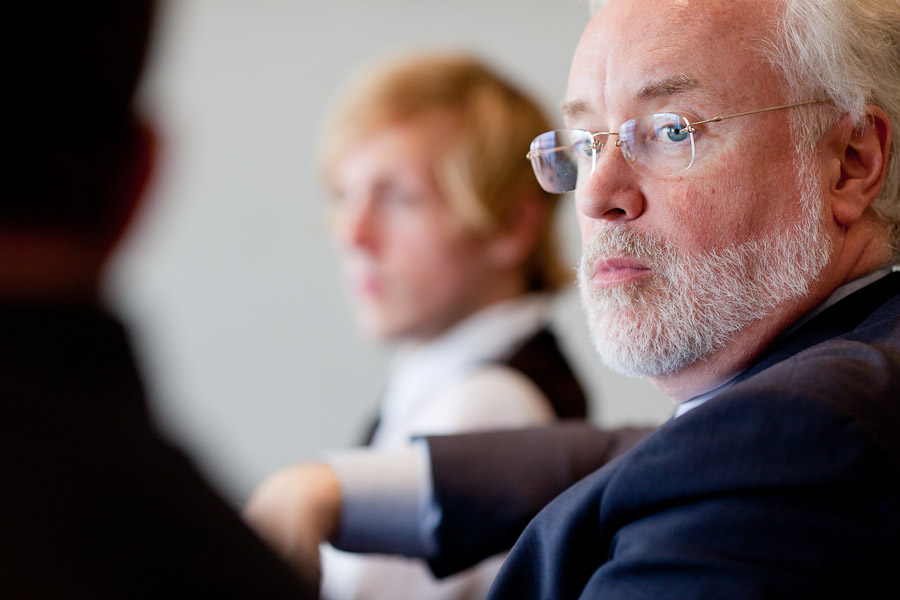
"The R&D model has shifted a lot. Time has marched on and there are newer ways of doing things"
Steve Alexander, Ciena CTO
Q: Industry R&D has changed in the last decade. The optical boom of 1999-2000 resulted in venture capital (VC) money funding hundreds of start-ups. There were vibrant operator labs while system vendors had tightly-coupled optical system/component teams. Now system and optical component vendors must use hard-earned cash to fund R&D. Given the financial constraints of the optical industry, is sufficient R&D being done?
A: The marketplace in general is still a little smarting from what happened ten years ago. So when someone from the component industry warns, the market looks at it and says: ‘Here we go again’. But a great question to ask is: What is different this time from last time?
What is different this time is broadband apps. It's a great time to be a bandwidth company and that is fundamentally what Ciena is.
The first wave of networking was about connecting locations. This was the wireline phone service. That scales at a certain rate; there are so many locations on the planet and while estimates vary, there are about 500 million locations you want to interconnect.
The next wave is people connecting to people with handheld wireless devices. Well, guess what? There are a whole lot more people then there are places - about 5 billion.
Now you are at the point where machines talk to machines. Again there are ten times the machines as there are people - 50 billion things that can talk to each other.
If you sum all these inflection points, you get this phenomenal hockey stick in terms of capacity. That is what is different this time. And capacity bandwidth determines an end-user’s experience in a way that it never did in the past.
Now let's talk R&D.
The R&D model has shifted a lot. There was all this influx of VC money which created lots of new ideas and new entrants. Time has marched on and there are newer ways of doing things.
I'll point you to coherent optics: Why is coherent a good thing? A lot of the R&D in the components space went after things such as polarisation mode dispersion compensation. Lots of companies sprang up, lots of approaches were proposed, all targeted at introducing more photonics complexity to solve the problem. But you can solve that problem with basic maths if you do it with a coherent receiver and digital signal processing. It just completely changes the game. And there are other examples - the emergence of pluggable optical transceivers.
So where the R&D goes, changes.
Could the industry benefit from more overall R&D, more VC money? Sure it could.
But will we get to the stage where optical problems need to be solved and there are insufficient resources?
There is always that risk.
You have seen a reduction in the large national labs - partially funded by industry and sometimes by government - those labs, their role in the marketplace has been reduced dramatically.
Also there isn’t that attractiveness to hardware-based ventures any more. There are some here and there but by and large, if a VC is weighing putting money into something where you can get to first revenue with software, you can do it in a year or two, and with tens of millions of dollars versus first revenue which might be hardware-based, might take three to five years, and require several hundred million dollars; the calculus there is a problem.
VCs will typically fund more of the smaller [software] ones with the expectation that some of them will meet their objectives.
The specialist companies - which Ciena represents - are fortunate in that we are not trying to be everything to everybody. Ciena is focussed on the sweet spot where the bandwidth of photonics and service deliver attractiveness of Ethernet play. We focus our R&D very specifically on places where we think we can drive differentiation.
What you have seen is people focussing their R&D.
There is significant R&D being conducted in Asia Pacific. Engineers’ wages are cheaper in countries like China while the scale of R&D there is hugely impressive. How can established companies such as Ciena compete?
For a North American homegrown - which is where Ciena originated - you have to play on a world stage. That translates into being willing to step out and be a little bit uncomfortable at times in terms of going into other territories and using other ideas.
We have the Gurgaon facility in India to develop a capability to take advantage of these new emerging markets. You get the benefits of wage rate but you also get exposure to new markets and different ways of thinking.
The problem statements in certain of these countries are much different. If they are building infrastructure for the first time they'll typically have a different approach than you might have from North America and Western Europe, where you are building infrastructure that must work with the last three or four generations of infrastructure. You get a different approach which you could argue is another view of innovation and creativity.
At the same time you are mindful of what do you put where. You try to line up complexity and risk with the folks who you think are best at mitigating those; if cost is the issue you align that with the workforce that will get it done at the lowest cost. If you absolutely have to hit a release window, you'll approach it differently compared to whether you have some flexibility in time but you must hit a specific performance or cost point.
You optimise the selection of where work gets done accordingly.

'I'm not sure there is any one industry that if we looked more like them, we would be better off.'
Any sense that Ciena must work smarter because of the scale of competition from other markets that can call on more engineers that you can hope for?
From a Ciena perspective, I wouldn't say it is a new challenge.
Ciena came to market in the mid-90s and the first competitors were behemoths: the Alcatels, Lucents, NECs and Fujitsus. We looked at the resources they had and they were ten times or a hundred times bigger. We have always been the smaller, faster, nimbler start-up.
I'm not sure we view it dramatically differently now other than some of the geographies might have changed.
How do you choose what R&D to perform? Product lines have their own evolutions driven by customer demands but how do you ensure you don't miss important developments?
This is probably the problem in R&D in some cases.
The way I describe it is the white space problem: you sit in a room and you throw up all your ideas, and you throw up all the customer-asks and you stare at them and say: What did we forget? That is the white space: What didn't you remember to put up there?
What you have to do is have an environment, a culture that rewards innovation. It is acknowledging that innovation can come from everywhere and anywhere. It can come off the factory floor, out of R&D, from the CTO, out of sales, customers and marketing. It just happens and you have to have a process by which you rapidly identify ideas, you discuss them, flesh them out and put them into buckets: Is this an incremental extension of the product? Is this taking me into an adjacent space that I hadn't thought of before? Is this going to change the world?
If you are smart about how you do R&D, you purposefully fund a little bit in each. You have to be diligent about making sure that you have got that balance of investment.
Ciena is a select member of AT&T’s Domain programme. How that is influencing your approach to R&D?
Clearly it is still early days in the life of the programme because the design cycles are anywhere between six months for simple things to 24-36 months for complete new platforms.
I think the opportunity in one of focus. Because the landscape is different, you are not sitting there with ten other people at the table, there is typically you, the customer and one other. That gives you the chance to focus and dialogue differently.
It has created more of a spirit of collaboration because we are all trying to solve the customer's problem or produce more value for them. It is early days though.
Any sign that this domain experience will benefit your other customers?
It is still too early to say other than if you look at AT&T’s network, the scale, scope, richness of service and the size, that will over time be a model that other networks would like to look at. At the same time they are going to try to differentiate their offerings in the marketplace.
It is a balancing act as to what is generally applicable in the marketplace and what is specific to AT&T's needs.
How do you ensure you keep abreast of developments?
I've always said the CTO job is a technology job, but it also has talking, travelling, troublemaking, trouble-shooting pieces to it.
I get my compass set by being out in the marketplace with customers, with analysts, at industry forums and talking to peers. There is value in technical journals and meetings but I get a lot more from standing at a whiteboard with the CTO of one of our customers, or talking to their engineering groups or product managers, discussing what if? Have you thought of this? How do we solve this problem? What are your issues? How can we help?
I get a lot more out of that, and it is valuable to me as one of the folks that help steer the ship.
Have you studied R&D in other industries and learnt something useful?
I have looked at big pharmaceuticals and how the automotive industry does R&D - the platform-based approaches and such. Where appropriate I've tried to adopt those things into my thinking.
I'm not sure there is any one industry that if we looked more like them, we would be better off.
You have to look at the collaboration tools certain industries use, the multi-platform models, the consistent design reuse in certain industries; those have all been helpful to us in understanding what the infrastructure business has to look like.
In Part 2, Steve Alexander discusses optical networking and technology trends