

Books read in 2021: Part 2

In Part II, two more industry figures pick their reads of the year: Sara Gabba of II-VI and Ciena’s Joe Marsella.
Sara Gabba, Strategic Marketing, II-VI
I’ve always read a lot. I cannot fall asleep without the sweet or the exciting company of a good book!
In the last year, I’ve spent many evenings reading fairy tales to my young daughter and, on top of the traditional ones from Andersen or the Grimm brothers, I’ve surprisingly discovered that she really likes the Greek myths (in an adaptation for children), which are the archetypes of most of the ‘modern’ tales. Love, mystery, jealousy, fear, talent, heroism: all the instincts and passions of humankind are there and able to capture every reader.
Coming to the books that I enjoyed most this past year, I’ll mention three, beginning with L’infinito Tra Le Note: Il Mio Viaggio Nella Musica (My Journey into Music) by the famous orchestra director Riccardo Muti.
In simple words, he leads you through the history of music, disclosing the essence of the main composers and the secrets that are hidden among their notes and silences, all filtered by his sensitivity and his long experience as director of the world’s most important orchestras.
Galeotto fu il collier (A Gallehault was the Collier) is an amusing book from the prolific and always brilliant pen of Andrea Vitali, an Italian writer whose novels typically take place in Bellano, a nice village on the eastern shore of the Lake of Como where he was born and worked as a general practitioner. Bellano is indeed a charming village, in addition to the well-known Bellagio.
This book is a choral novel, able to recreate the atmosphere of common life in 1930’s Italy. The comedy lies in the everyday routine of the many simple characters, in the plot full of anecdotes and of said-unsaid words: an amazing and wonderful comedy of errors!
Lastly, I really loved Liar Moon written by the Italian-American writer, Ben Pastor.
This romance is the second of the saga featuring Martin Bora, the Major of the Wehrmacht whose character was inspired by Claus von Stauffenberg, the German colonel who attempted to assassinate Adolf Hitler in 1944 (maybe you remember the Tom Cruise movie Valkyrie, also inspired by von Stauffenberg’s brave acts).
This historical mystery novel takes place in the North-East region of Italy during the German occupation in the Second World War, where the skilled army officer Bora solves a complex murder case. Martin Bora is fighting for the wrong side in the world conflict, so he obviously has all the characteristics to be a villain. However, he is far from being a stereotype and you cannot avoid but to love him for his torn sense of loyalty to his nation and his daring acts of disobedience to the criminal orders received from his commanders.
Joe Marsella, Vice President, Product Line Management, Routing and Switching at Ciena.
As an evolving society, we often tend to look back on the ‘good old days’ and lament how difficult life has become, often forgetting that as a whole we are much better off than we have ever been.
History, for me, is a healthy way of not only reminding oneself of that simple fact but also serving as an opportunity to learn from past experiences to improve the journey ahead.
With that in mind, one book I found extremely interesting in 2021 is One Minute to Midnight: Kennedy, Khrushchev, and Castro on the Brink of Nuclear War by Michael Dobbs, which tells the story of the days leading up to the Cuban Missile Crisis of 1962 and how close the world came to nuclear annihilation.
The story focuses on how quickly a series of decisions can escalate over a 13-day time frame and the ability of two opposing leaders to reach a compromise for the greater good of not only their respective countries but the world.
As business leaders, we are required to make decisions and negotiate constantly, and while our negotiated outcomes rarely reach the magnitude of Kennedy and Khrushchev in the fall of 1962, it’s reassuring to know that even in the most difficult circumstances agreements can be reached with mutually beneficial results.


II-VI expands its 400G and 800G transceiver portfolio
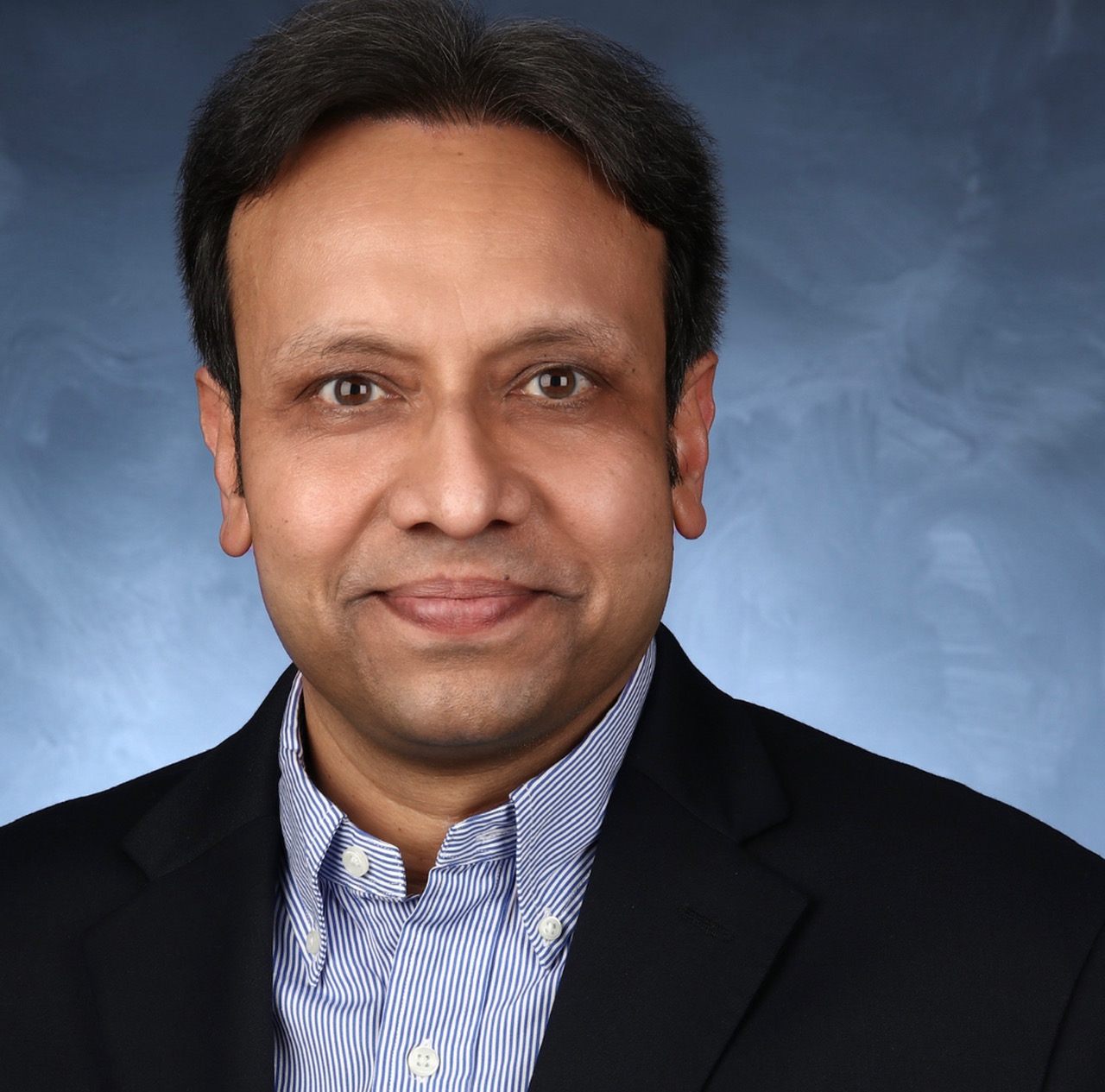
II-VI has showcased its latest high-speed optics. The need for such client-side modules is being driven by the emergence of next-generation Ethernet switches in the data centre.
The demonstrations, part of the OFC virtual conference and exhibition held last month, featured two 800-gigabit and two 400-gigabit optical transceivers.
“We have seen the mushrooming of a lot of datacom transceiver companies, primarily from China, and some have grown pretty big,” says Sanjai Parthasarathi, chief marketing officer at II-VI.
But a key enabler for next-generation modules is the laser. “Very few companies have these leading laser platforms – whether indium phosphide or gallium arsenide, we have all of that,” says Parthasarathi.
During OFC, II-VI also announced the sampling of a 100-gigabit directly modulated laser (DML) and detailed an optical channel monitoring platform.
“We have combined the optical channel monitoring – the channel presence monitoring, the channel performance monitoring – and the OTDR into a single integrated subsystem, essentially a disaggregated monitoring system,” says Parthasarathi.
An optical time-domain reflectometer (OTDR) is used to characterise fibre.
High-speed client-side transceivers
II-VI demonstrated two 800-gigabit datacom products.
One is an OSFP form factor implementing 800-gigabit DR8 (800G-DR8) and the other is a QSFP-DD800 module with dual 400-gigabit FR4s (2x400G-FR4). The DR8 uses eight fibres in each direction, each carrying a 100-gigabit signal. The QSFP-DD800 supports two FR4s, each carrying four, 100-gigabit wavelengths over single-mode fibre.
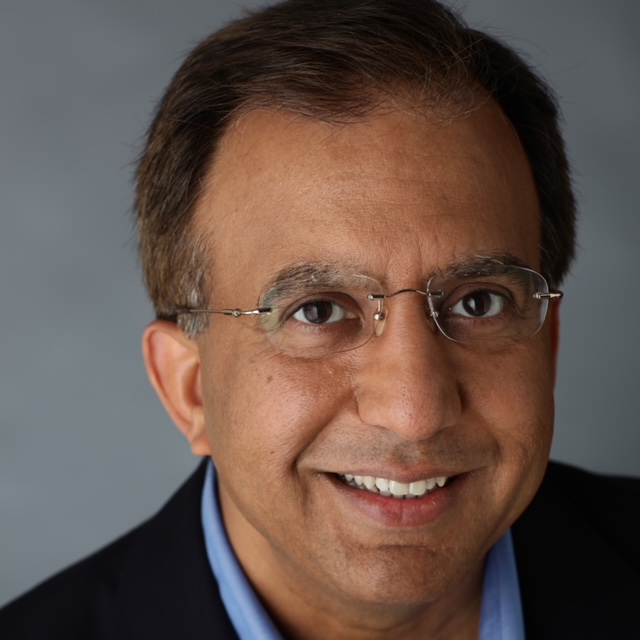
“These are standard IEEE-compliant reaches: 500m for the DR8 and 2km for the dual FR4 talking to individual FR4s,” says Vipul Bhatt, senior strategic marketing director, datacom at II-VI.
The 800G-DR8 module can be used as an 800-gigabit link or, when broken out, as two 400-gigabit DR4s or eight individual 100-gigabit DR optics.
II-VI chose to implement these two 800-gigabit interfaces based on the large-scale data centre players’ requirements. The latest switches use 25.6-terabit Ethernet chips that have 100-gigabit electrical interfaces while next-generation 51.2-terabit ICs are not far off. “Our optics is just keeping in phase with that rollout,” says Bhatt.
During OFC, II-VI also showcased two 400-gigabit QSFP112 modules: a 400-gigabit FR4 (400G-FR4) and a multi-mode 400-gigabit SR4 (400G-SR4).
The SR4 consumes less power, is more cost-effective but has a shorter reach. “Not all large volume deployments of data centres are necessarily in huge campuses,” says Bhatt.
II-VI demonstrated its 800-gigabit dual FR4 module talking to two of its QSFP112 400-gigabit FR4s.
Bhatt says the IEEE 802.3db standard has two 400G-SR4 variants, one with a 50m reach and the second, a 100m reach. “We chose to demonstrate 100m because it is inclusive of the 50m capability,” says Bhatt.

II-VI stresses its breadth in supporting multi-mode, short-reach single-mode and medium-reach single-mode technologies.
The company says it was the electrical interface rather than the optics that was more challenging in developing its latest 400- and 800-gigabit modules.
The company has 100-gigabit multi-mode VCSELs, single-mode lasers, and optical assembly and packaging. “It was the maturity of the electrical interface [that was the challenge], for which we depend on other sources,” says Bhatt.
100-gigabit PAM-4 DML
II-VI revealed it is sampling a 100-gigabit PAM-4 directly modulated laser (DML).
Traditionally, client-side modules for the data centre come to market using a higher performance indium phosphide externally-modulated laser (EML). The EML may even undergo a design iteration before a same-speed indium phosphide DML emerges. The DML has simpler drive and control circuitry, is cheaper and has a lower power consumption.
“But as we go to higher speeds, I suspect we are going to see both [laser types] coexist, depending on the customer’s choice of worst-case dispersion and power tolerance,” says Bhatt. It is too early to say how the DML will rank with the various worst-case test specifications.
Parthasarathi adds that II-VI is developing 100-gigabit and 200-gigabit-per-lane laser designs. Indeed, the company had an OFC post-deadline paper detailing work on a 200-gigabit PAM-4 DML.
Optical monitoring system
Optical channel monitoring is commonly embedded in systems while coherent transceivers also provide performance metrics on the status of the optical network. So why has II-VI developed a standalone optical monitoring platform?
What optical channel monitors and coherent modules don’t reveal is when a connector is going bad or fibre is getting bent, says Parthasarathi: “The health and the integrity of the fibre plant, there are so many things that affect a transmission.”
Operators may have monitoring infrastructure in place but not necessarily the monitoring of the signal integrity or the physical infrastructure. “If you have an existing network, this is a very easy way to add a monitoring capability,” says Parthasarathi.

“As we can control all the parts – the optical channel monitoring and the OTDR – we can configure it [the platform] to meet the application,” adds Sara Gabba, manager, analysis, intelligence & strategic marcom at II-VI. “Coherent indeed provides a lot of information, but this kind of unit is also suitable for access network applications.”
The optical monitoring system features an optical switch so it can cycle and monitor up to 48 ports.
With operators adopting disaggregated designs, each element in the optical network is required to have more intelligence and more autonomy.
“If you can provide this kind of intelligent monitoring and provide information about a specific link, you create the possibility to be more flexible,” says Gabba.
Using the monitoring platform, intelligence can be more widely distributed in the optical network complementing systems operators may have already deployed, she adds.