

Books of 2024: Final Part
Gazettabyte has been asking industry figures to pick their reads of 2024. In the final part, Professor Polina Bayvel, Hojjat Salemi, Professor Laura Lechuga, and the editor of Gazettabyte share their selections.
Professor Polina Bayvel, Royal Society Research Professor & Head of the Optical Networks Group, Department of Electronic & Electrical Engineering, UCL
I recently attended a Royal Society Discussion Meeting where Leslie Valiant gave a brilliant talk on educability as a better definition than intelligence. A Harvard professor, he has developed many algorithms that underpin today’s networks, including Valiant’s load balancing. He is a profound thinker, and I wanted immediately to read his book, The Importance of Being Educable: A New Theory of Human Uniqueness.’
Although written in a popular style, it argues that educability (a precisely defined computational model) is a better term than intelligence, for which no agreed definition exists. He explains how we, as a human race, have been able to create the technological civilisation that we have and argues that this civilisation enabler is educability. He also implies that current AI models are not educable. The book is masterful in its lucidity in explaining complex concepts in computation. I really could not put it down.
Another read which has taken my breath away is A. N. Tolstoy’s The Road to Calvary (Russian: Хождение по мукам, romanised: Khozhdeniye po mukam, lit. ’Walking Through Torments’), also translated as Ordeal, is a trilogy set just before the Russian Revolution (starting 1914) and follows the lives of two sisters and their lovers/ husbands goes through the revolution and the Russian Civil War. It was a staple in Soviet schools, but leaving at age 12, I missed it and have only recently read it.
It’s a monument to history, and when one reads it, one realises that the well-to-do Russian liberals who argued for change and the removal of the Czarist rules had no idea what fate would face them or how their lives would change forever.
It made me think of today’s parallel – do we always understand the consequences of wanting liberal changes? The Russian pre-Revolution liberals, the intelligentsia, wanted democracy and more power for the people. What they got was the opposite – totalitarian oppression.
I was also struck by the stark realisation that had WWI not occurred, there would not have been a revolution, and the lives of so many people, including that of my own family, would have followed a completely different course.
Hojjat Salemi, Chief Business Development Officer, Ranovus
Several years ago, I decided to avoid social media platforms like Instagram and TikTok, as well as the news channels Fox News and CNN. I found them to be major distractions and wasteful of time.
I used the time instead to read and listen to author interviews (podcasts) on YouTube, which often provide deeper insights into why they wrote their books and their key ideas. One of the best decisions I’ve made is controlling what I watch on YouTube—without ads! If you’re looking for good books about technology, here are my recommendations:
The book that won the Financial Times Business Book of the Year for 2024 is Supremacy: AI, ChatGPT, and the Race that Will Change the World by Party Olson.
It offers a fascinating narrative starting in 2012, focusing on how AI systems have developed, with a spotlight on two main figures: Dennis Hassabis, co-founder of DeepMind, and Sam Altman, the co-founder of OpenAI.
The book explores three major themes:
- how AI could reshape society as it grows increasingly intelligent,
- the unintended consequences of the technologies we create,
- and the moral dilemmas and risks of pushing these innovations too far. It’s a fast-paced, thought-provoking look at the future.
Another suggestion is Read Write Own: Building the Next Era of the Internet by Chris Dixon. The book is written clearly and engagingly and explains complex ideas like blockchain, NFTs, and decentralised networks. Dixon describes the evolution of the internet: the early days of reading information, the read-write era of social media where people shared but didn’t own content, and the emerging read-write-own era (Web3), where blockchain allows users to own digital assets.
While I’ve been thinking about decentralised networks a lot, I’m still not convinced they can take off, given our geopolitical challenges. Take Bitcoin, for example; if something goes wrong, who do you call? Moreover, Web3’s dominant players still rely on centralised computing power. It’s a thoughtful read, but only time will tell how Web3 unfolds.
Lastly, I recommend Ethics of Socially Disruptive Technologies: An Introduction. The book, available as a free PDF, is highly educational on how new technologies disrupt societal norms and ethical frameworks.
The book examines four specific technologies: social media, robots, climate engineering, and artificial wombs. For instance, social media was supposed to give everyone a voice and bring people together. Instead, it has often divided us, spread misinformation, and allowed foreign powers to interfere in elections. It challenges the idea of “government of the people, by the people, for the people” today. This book is perfect for anyone wanting to understand new technologies’ unintended consequences.
Professor Laura Lechuga, Head of the Nanobiosensors and Bioanalytical Application Group at the Catalan Institute of Nanoscience and Nanotechnology (ICN2).
I love reading and do it frequently, especially during the many work trips I take throughout the year.
My favourite reading of 2024 was Chip War: The Fight for the World’s Most Critical Technology by Chris Miller. It is an impressive book about the development of microelectronics and the pivotal role of chips in shaping the world powers.
Having a PhD focused on microelectronics, I enjoyed reading a book that will become a masterpiece. What I appreciated most were the personal stories of the brilliant scientists and engineers who conceived, developed, and solved all the technical obstacles to transforming the semiconductor industry that helped found some of the most influential companies in the world. This is a must-read book.
My second favourite book was The Maniac by Benjamin Labatut. The book is a combination of history and novel in which Labatut tells the story of brilliant physicists such as John von Neumann, a genius able to invent new fields. But the same prodigy whose work impacted future advances in computing terrified the people around him, and his personal life was miserable. The book describes the evolution of von Neumann’s work through to the battle between AI and a world champion player of the game Go. It is a book that reflects on the limits of technology, an original, addictive, and beautiful read.
Another book I loved in 2024 was Lessons in Chemistry by Bonnie Garmus. It is a feminist novel about how difficult a professional career was for women scientists in the 1960s. I felt totally reflected in it, as our position has not changed much. It is a book that mixes funny and sad situations, is easy to read, very enjoyable, and has a clear message.
My last recommendation is the old Atlas Shrugged book by Ayn Rand. It isn’t easy to read due to its length but it is a fascinating futuristic story about a dystopian United States, and is now more actual than ever. It is a story of how human stupidity gains a significant advantage over intelligence and the devastating consequences for the U.S. This could also be extended to the rest of the world, perhaps a prophecy to be fulfilled in the coming years.
Roy Rubenstein, Editor of Gazettabyte
I read many books in 2024 and will highlight three. One is Strength in What Remains by Tracy Kidder. I had read his most recent book, Rough Sleepers: Dr. Jim O’Connell’s Urgent Mission to Bring Healing to Homeless People, and this was my follow-up read. Kidder is a master storyteller who finds the most remarkable individuals to write about. I highly recommend both.
Dame Hilary Mantel is best known for her Wolf Hall trilogy. Last year, a book of her writings—articles for literary magazines, essays, film reviews, and her BBC Reith Lectures—was published. A Memoir of My Former Self: A Life in Writing is an excellent read by a fabulous writer.
Lastly, I recommend the 55-hour audible version of Alexandre Dumas’s The Count of Monte Cristo. While listening, I walked past the local cinema and realised there was a 2024 film version being shown. I entered, showed the attendant the audible version and asked if the film was shorter.

Optical networking's future
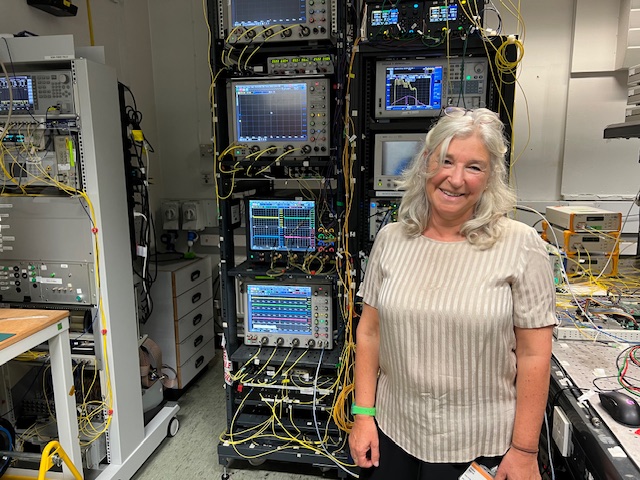
Should the industry do more to support universities undertaking optical networking research? Professor Polina Bayvel thinks so and addressed the issue in her plenary talk at the ECOC conference and exhibition held in Glasgow, Scotland, earlier this month.
In 1994, Bayvel set up the Optical Networks Group at University College London (UCL). Telecom operators and vendors like STC, GPT, and Marconi led optical networking research. However, setting up the UCL’s group proved far-sighted as industry players cut their research budgets or closed.
Universities continue to train researchers, yet firms do not feel a responsibility to contribute to the costs of their training to ensure the flow of talent. One optical systems vendor has hired eight of her team.
In her address, Bayvel outlined how her lab should be compensated. For example, when a club sells a soccer player, the team that developed him should also get part of the fee.
Such income would be welcome, says Bayvel, citing how she has a talented student from Brazil who needs help to fund his university grant. Her lab would also benefit. During a visit, a pile of boxes – state-of-the-art test equipment – had just arrived.
Plenary talk
Bayvel mentioned how the cloud didn’t exist 18 years ago and that what has enabled it is optical networking and Moore’s law. She also tackled how technology will likely evolve in the next 18 years.
Digital data is being created at a remarkable rate, she said. Three exabytes (a billion billion bytes) are being added to the cloud, which holds several zettabytes (1,000 exabytes or ZB) of data. By 2025, data in the cloud will be 275ZB.
The cited stats continued: 6.2 billion kilometres of fibre have been deployed between 2005 and 2023, having 60Zbits of capacity. In comparison, all data satellite systems now deployed offer 100Tb, less than the capacity of one fibre.
Moore’s law has enabled complex coherent digital signal processors (DSPs) that clean up the distortions of an optical signal sent over a fibre. The first coherent DSPs consumed 1W for each gigabit of data sent. Over a decade later, DSPs use 0.1W to send a gigabit.
Data growth will keep driving capacity, says Bayvel. Engineers have had to fight hard to squeeze more capacity using coherent optical technology. Further improvement will come from techniques such as non-linear compensation. One benefit of Moore’s law is that coherent DSPs will be more capable of tasks such as non-linear compensation. For example, Ciena’s latest 3nm CMOS process, the WaveLogic 6e DSP, uses one billion digital logic gates.
Extra wide optical comms
But only so much can be done by the DSP and increasing the symbol rate. The next step will be to ramp the bandwidth by combining a fibre’s O, S, C, L, E and U spectrum bands. New optical devices, such as hybrid amplifiers, will be needed, and pushing transmission distance over these bands will be hard.
“We fought for fractions of a decibel [of signal-to-noise ratio]; surely we’re not going to give up the wavelengths available through this [source of] bandwidth?” said Bayvel.
In his Market Focus talk at ECOC, BT’s Professor Andrew Lord argued the opposite. There will be places where combining the C- and L-bands will make sense, but why bother when spatial division multiplexing fibre deployments in the network are inevitable, he said.
“It is not spatial division multiplexing versus extra wide optical comms; they can co-exist,” said Bayvel.
Bayvel describes work to model the performance of such a large amount of spectrum that has been done in her lab using data collected from the MAREA sub-sea cable. Combining the fibre’s spectral bands – a total of 60 terahertz of spectrum – promises to quadruple the bandwidth currently available. However, this will require more powerful DSPs than are available today.
Another area ripe for development is intelligent optical networking using machine learning.
An ideas lag
Bayvel used her talk to pay tribute to her mentor, Professor John Midwinter.
Midwinter was an optical communications pioneer at BT and then UCL. He headed the team that developed the first trial systems that led to BT becoming the first company in the world to introduce optical fibre communications systems in the network.
In 1983, his last year at BT, Midwinter wrote in the British Telecom Technology Journal that this was the year coherent optical systems would be taken seriously. It took another 20-plus years.
Bayvel noted how many ideas developed in optical research take considerable time before the industry adopts them. “Changes in the network are much slower,” she said. “Operators are conservative and focus on solving today’s problems.”
Another example she cited is Google’s Apollo optical switch being used in its data centres. Bayvel noted that the switch is relatively straightforward, using MEMS technology that has been around for 25 years.
Bayvel used her keynote to attack the telecom regulators.
“It is simply unfair that the infrastructure providers get such a small part of the profits compared to the content providers,” she said. “The regulators have done a terrible job.”

ECOC 2009: Squeezing optics out of optical communications
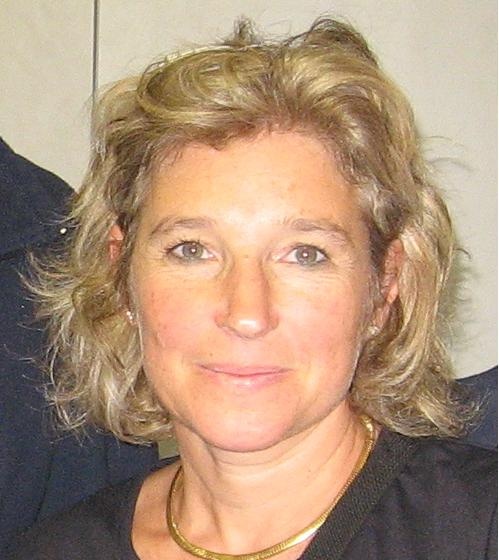 Prof. Polina BayvelAn interview with Polina Bayvel, Professor of Optical Communications and Networks and head of the Optical Networks Group at University College London (UCL), on her ECOC conference impressions.
What did you find noteworthy at ECOC 2009?
PB: So much work on digital signal processing and coherent detection...will these techniques lead to another revolution in fibre optics? But there is much to understand about how to design the DSP algorithms and how to best match these to appropriate fibre maps in some implementable way.
Did anything at the conference surprise you?
PB: Is there really a capacity crunch or is it a cost crunch and who will end up paying? There is much work on new fibres, new DSP but why is no-one looking at new amplifiers?
What did you learn from ECOC?
PB: I learnt how little progress there has been made in all-optical networking - the well-trodden ideas and arguments on wavelength routing which have been circulating for over 15 years are not being taken up by operators but are being re-discovered and re-offered as new...and just how conservative the operators still are, except those in Japan.
Did you see or hear anything that gives reason for industry optimism?
PB: Lots of buzz about linear and nonlinear DSP, error correcting codes, net coding gain, FPGAs and many other developments which, whilst invigorating the industry are squeezing optics out of optical communications. Here is to the fightback for optics!