

The evolution of optical networking
An upcoming issue of the Proceeedings of the IEEE will be dedicated solely to the topic of optical networking. This, says the lead editor, Professor Ioannis Tomkos at the Athens Information Technology Center, is a first in the journal's 100-year history. The issue, entitled The Evolution of Optical Networking, will be published in either April or May and will have a dozen invited papers.
One topic that will change the way we think about optical networks is flexible or elastic optical networks.
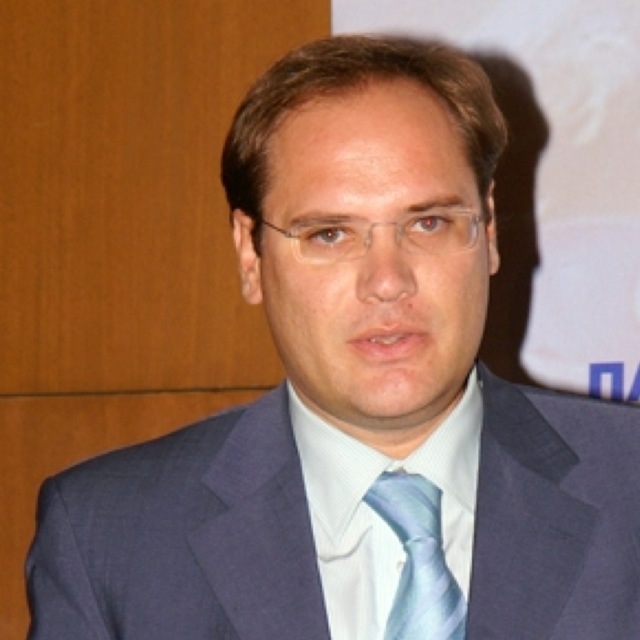
Professor Ioannis Tomkos
"If I have to pick one topic that will change the way we think about optical networks, it is flexible or elastic optical networks, and the associated technologies," says Tomkos.
A conventional dense wavelength division multiplexing (DWDM) network has fixed wavelengths. For long-haul optical transmission each wavelength has a fixed bit rate - 10, 40 or 100 Gigabit-per-second (Gbps), a fixed modulation format, and typically occupies a 50GHz channel. "Such a network is very rigid," says Tomkos. "It cannot respond easily to changes in the network's traffic patterns."
This arrangement has come about, says Tomkos, because the assumption has always been that fibre bandwidth is abundant. "But at the moment we are only a factor of two away from reaching the Shannon limit [in terms of spectral efficiency bits/s/Hz) so we are going to hit the fibre capacity wall by 2018-2020," he warns.
The maximum theoretically predicted spectral efficiency for an optical communication system based on standard single-mode fibres is about 9bits/s/Hz per polarisation for typical long-haul system reaches of 500km without regeneration, says Tomkos. "At the moment the most advanced hero experiments demonstrated in labs have achieved a spectral efficiency of about 4-6bits/s/Hz," he says. This equates to a total transmission capacity close to 100 Terabits-per-second (Tbps). After that, deploying more fibre will be the only way to further scale networks.
Accordingly, new thinking is required.
Two approaches are being proposed. One is to treat the optical network in the same way as the air interface in cellular networks: spectrum is scarce and must be used effectively.
"We are running close to fundamental limits, that's why the optical spectrum of available deployed standard single mode fibers should be utilized more efficiently from now on as is the case with wireless spectrum," says Tomkos.
 How optical communication is following in the footsteps of wireless.
The second technique - spatial multiplexing - looks to extend fibre capacity well beyond what can be achieved using the first approach alone. Such an option would need to deploy new fibre types that support multiple cores or multi-mode transmission.
Flexible spectrum
"We have to start thinking about techniques used in wireless networks to be adopted in optical networks," says Tomkos (See text box). With a flexible network, the thinking is to move from the 50GHz fixed grid, down to 12.50GHz, then 6.25GHz or 1.50GHz or even eliminate the ITU grid entirely, he says. Such an approach is dubbed flexible spectrum or a gridless network.
With such an approach, the optical transponders can tune the bit rate and the modulation format according to the reach and capacity requirements. The ROADMs or, more aptly, the wavelength-selective switches (WSSes) on which they are based, also have to support such gridless operation.
WSS vendors Finisar and Nistica already support such a flexible spectrum approach, while JDS Uniphase has just announced it is readying its first products. Meanwhile US operator Verizon is cheerleading the industry to support gridless. "I'm sure Verizon is going to make this happen, as it did at 100 Gigabit," says Tomkos.
Spatial multiplexing
The simplest way to implement spatial multiplexing is to use several fibres in parallel. However, this is not cost-effective. Instead, what is being proposed is to create multi-core fibres - fibres that have more than one core - seven, 19 or more cores in an hexagonal arrangement, down which light can be transmitted. "That will increase the fibre's capacity by a factor of ten of 20," says Tomkos.
Another consideration is to move from single-mode to multi-mode fibre that will support the transmission of multiple modes, as many as several hundred.
The issue with multi-mode fibre is its very high modal dispersion which limits its bandwidth-distance product. "Now with improved techniques from signal processing like MIMO [multiple-input, multiple out] processing, OFDM [orthogonal frequency division multiplexing] to more advanced optical technologies, you can think that all these multiple modes in the fibre can be used potentially as independent channels," says Tomkos. "Therefore you can potentially multiply your fibre capacity by 100x or 200x."
The Proceedings of the IEEE issue will have a paper on flexible networking by NEC Labs, USA, and a second, on the ultimate capacity limits in optical communications, authored by Bell Labs.
Further reading:
MODE-GAP EU Seventh Framework project, click here.

Tackling the coming network crunch
 "In the end you run out of the ability to transmit more information along a single-mode fibre"
Ian Giles, Phoenix Photonics
The project, dubbed MODE-GAP, is part of the EC's Seventh Framework programme, and includes system vendor Nokia Siemens Networks (NSN), as well as optical component, fibre firms and several universities.
Current 100 Gigabit-per-second (Gbps) dense wavelength division multiplexing (DWDM) systems are able to transmit a total of 10 terabits-per-second of data across a fibre (100 channels, each at 100Gbps). System vendors have said that with further technology development, 25Tbps will be transported across fibre.
But IP traffic in the network is growing at over 30% each year. And while techniques are helping to improve overall transmission, the rate of progress is slowing down. A view is growing in the industry that without some radical technological breakthrough, new transmission media will be needed in the next two decades to avoid an inevitable capacity bottleneck.
"The Shannon Limit - the amount of information that can be transmitted - depends on the signal-to-noise and the amount of power you can put down a fibre," says Ian Giles, CEO of Phoenix Photonics, a fibre component specialist and one of the companies taking part in the project. "You can enhance transmission capacity by modulation techniques to increase bit rate, WDM and polarisation multiplexing but in the end you run out of the ability to transmit more information along a single-mode fibre."
This 'network crunch' is what the MODE-GAP project is looking to tackle.
Project details
One of the approaches that will be investigated is exploiting the multiple paths light travels down a multimode fibre to enable the parallel transmission of more than one channel.
These multiple paths light takes traveling in a multimode fibre disperses the signal. "The proposal we are making is that we take a low-moded fibre and select specific modes for each channel, or a high-moded fibre and select modal groups that are very similar," says Giles. The idea is that by identifying such modes in the multimode fibre, the dispersion for each mode or model groups will be limited.
But implementing such a spatially modulated system is tricky as the modes need to be identified and then have light launched into them. In turn, the modes must be kept apart along the fibre's span.
The project will tackle these challenges as well as use digital signal processing at the output to separate the transmitted channels. The project consortium believes that up to 10 channels could be used per fibre.

The second approach the MODE-GAP project will explore involves using specialist or photonic bandgap fibre. "The problem with solid core fibre is that the core will scatter light, and with higher intensity, you start to see non-linear scattering," says Giles. "So there is a limit to how much power you can put down a fibre without introducing these non-linear effects."
Photonic bandgap fibre has an air core that doesn't create scattering. As a result the non-linear threshold is some 100x higher, meaning that more power can be put into the fibre.
What next?
The MODE-GAP project is still in its infancy. The goal is to develop a system that allows the multiplexing and demultiplexing of the spatially-separated channels on the fibre. That will be done using multimode fibre but Giles stresses that it could eventually be done using photonic bandgap fibre. "You then enhance capacity: you increase the number of channels, and decrease the non-linearities which means you can increase the amount of information sent per channel," says Giles.
"Up till the spatial modulation part, the system is the same as you have now," he adds. "It is only the spatial modulation part that needs new components." NSN will use any prototype developed within its test-bed where it will be trailed. "They don't want to reinvent their equipment at each end," says Giles.
The project will also look to develop a fibre-amplifier that will boost all the fibre's spatial separated channels.
The project's goal is to demonstrate a working system. "The ultimate is to show the hundredfold improvement," says Giles. "We will do that with multiple channel transmission along a single photonic bandgap fibre and higher capacity [data transmission] per channel."
Project partners
In addition to NSN's systems expertise and test-bed, Eblana Photonics will be developing lasers for the project while Phoenix will address the passive components needed to launch and detect specific modes. OFS Fitel is providing the fibre expertise, while the University of Southampton's Optoelectronics Research Centre is leading the project.
The other universities include the COBRA Institute at the Technische Universiteit Eindhoven which has expertise in the processing and transmission of spatial division multiplexed signals, while the Tyndall National Institute of University College Cork is providing system expertise, detectors, transmitters and some of the passive optics and planar waveguide work.
ESPCI ParisTech, working with the University of Southampton, will provide expertise in surface finishes. "The key here is that for the fibres to be low loss, and to maintain the modes in the fibre, they have to have very good inside surfaces," says Giles.