

Marvell's 50G PAM-4 DSP for 5G optical fronthaul

- Marvell has announced the first 50-gigabit 4-level pulse-amplitude modulation (PAM-4) physical layer (PHY) for 5G fronthaul.
- The chip completes Marvell’s comprehensive portfolio for 5G radio access network (RAN) and x-haul (fronthaul, midhaul and backhaul).
Marvell has announced what it claims is an industry-first: a 50-gigabit PHY for the 5G fronthaul market.
Dubbed the AtlasOne, the PAM-4 PHY chip also integrates the laser driver. Marvell claims this is another first: implementing the directly modulated laser (DML) driver in CMOS.
“The common thinking in the industry has been that you couldn’t do a DML driver in CMOS due to the current requirements,” says Matt Bolig, director, product marketing, optical connectivity at Marvell. “What we have shown is that we can build that into CMOS.”
Marvell, through its Inphi acquisition, says it has shipped over 100 million ICs for the radio access network (RAN) and estimates that its silicon is in networks supporting 2 billion cellular users.
“We have been in this business for 15 years,” says Peter Carson, senior director, solutions marketing at Marvell. “We consider ourselves the number one merchant RAN silicon provider.”
Inphi started shipping its Polaris PHY for 5G midhaul and backhaul markets in 2019. “We have over a million ships into 5G,” says Bolig. Now Marvell is adding its AtlasOne PHY for 5G fronthaul.
Mobile traffic
Marvell says wireless data has been growing at a compound annual growth rate (CAGR) of over 60 per cent (2015-2021). Such relentless growth is forcing operators to upgrade their radio units and networks.
Stéphane Téral, chief analyst at market research firm, LightCounting, in its latest research note on Marvell’s RAN and x-haul silicon strategy, says that while 5G rollouts are “going gangbusters” around the world, they are traditional RAN implementations.
By that Téral means 5G radio units linked to a baseband unit that hosts both the distributed unit (DU) and centralised unit (CU).
But as 5G RAN architectures evolve, the baseband unit is being disaggregated, separating the distributed unit (DU) and centralised unit (CU). This is happening because the RAN is such an integral and costly part of the network and operators want to move away from vendor lock-in and expand their marketplace options.
For RAN, this means splitting the baseband functions and standardising interfaces that previously were hidden within custom equipment. Splitting the baseband unit also allows the functionality to be virtualised and be located separately, leading to the various x-haul options.
How the RAN is being disaggregated includes virtualised RAN and Open RAN. Marvell says Open RAN is still in its infancy but is a key part of the operators’ desire to virtualise and disaggregate their networks.
“Every Open RAN operator that is doing trials or early-stage deployments is also virtualising and disaggregating,” says Carson.
RAN disaggregation is also occuring in the vertical domain: the baseband functions and how they interface to the higher layers of the network. Such vertical disaggregation is being undertaken by the likes of the ONF and the Open RAN Alliance.
The disaggregated RAN – a mixture of the radio, DU and CU units – can still be located at a common site but more likely will be spread across locations.
Fronthaul is used to link the radio unit and DU when they are at separate locations. In turn, the DU and CU may also be at separate locations with the CU implemented in software running on servers deep within the network. Separating the DU and the CU is leading to the emergence of a new link: midhaul, says Téral.
Fronthaul speeds
Marvell says that the first 5G radio deployments use 8 transmitter/ 8 receiver (8T/8R) multiple-input multiple-output (MIMO) systems.
MIMO is a signal processing technique for beamforming, allowing operators to localise the capacity offered to users. An operator may use tens of megahertz of radio spectrum in such a configuration with the result that the radio unit traffic requires a 10Gbps front-haul link to the DU.
Leading operators are now deploying 100MHz of radio spectrum and massive MIMO – up to 32T/32R. Such a deployment requires 25Gbps fronthaul links.
“What we are seeing now is those leading operators, starting in the Asia Pacific, while the US operators have spectrum footprints at 3GHz and soon 5-6GHz, using 200MHz instantaneous bandwidth on the radio unit,” says Carson.
Here, an even higher-order 64T/64R massive MIMO will be used, driving the need for 50Gbps fronthaul links. Samsung has demonstrated the use of 64T/64R MIMO, enabling up to 16 spatial layers and boosting capacity by 7x.
“Not only do you have wider bandwidth, but you also have this capacity boost from spatial layering which carriers need in the ‘hot zones’ of their networks,” says Carson. “This is driving the need for 50-gigabit fronthaul.”
AtlasOne PHY
Marvell says its AtlasOne PAM-4 PHY chip for fronthaul supports an industrial temperature range and reduces power consumption by a quarter compared to its older PHYs. The power-saving is achieved by optimising the PHY’s digital signal processor and by integrating the DML driver.
Earlier this year Marvell announced its 50G PAM-4 Atlas quad-PHY design for the data centre. The AtlasOne uses the same architecture but differs in that it is integrated into a package for telecom and integrates the DML driver but not the trans-impedance amplifier (TIA).
“In a data centre module, you typically have the TIA and the photo-detector close to the PHY chip; in telecom, the photo-detector has to go into a ROSA (receiver optical sub-assembly),” says Bolig. “And since the photo-detector is in the ROSA, the TIA ends up having to be in the ROSA as well.”
The AtlasOne also supports 10-gigabit and 25-gigabit modes. Not all lines will need 50 gigabits but deploying the PHY future-proofs the link.
The device will start going into modules in early 2022 followed by field trials starting in the summer. Marvell expects the 50G fronthaul market to start in 2023.
RAN and x-haul IC portfolio
One of the challenges of virtualising the RAN is doing the layer one processing and this requires significant computation, more than can be handled in software running on a general-purpose processor.
Marvell supplies two chips for this purpose: the Octeon Fusion and the Octeon 10 data processing unit (DPU) that provides programmability and as well as specialised hardware accelerator blocks needed for 4G and 5G. “You just can’t deploy 4G or 5G on a software-only architecture,” says Carson.
As well as these two ICs and its PHY families for the various x-haul links, Marvell also has a coherent DSP family for backhaul (see diagram). Indeed, LightCounting’s Téral notes how Marvell has all the key components for an all-RAN 5G architecture.
Marvell also offers a 5G virtual RAN (VRAN) DU card that uses the OcteonFusion IC and says it already has five design wins with major cloud and OEM customers.


SDM and MIMO: An interview with Bell Labs
Part 2: The capacity crunch and the role of SDM
The argument for spatial-division multiplexing (SDM) - the sending of optical signals down parallel fibre paths, whether multiple modes, cores or fibres - is the coming ‘capacity crunch’. The information-carrying capacity limit of fibre, for so long described as limitless, is being approached due to the continual yearly high growth in IP traffic. But if there is a looming capacity crunch, why are we not hearing about it from the world’s leading telcos?
“It depends on who you talk to,” says Peter Winzer, head of the optical transmission systems and networks research department at Bell Labs. The incumbent telcos have relatively low traffic growth - 20 to 30 percent annually. “I believe fully that it is not a problem for them - they have plenty of fibre and very low growth rates,” he says.
Twenty to 30 percent growth rates can only be described as ‘very low’ when you consider that cable operators are experiencing 60 percent year-on-year traffic growth while it is 80 to 100 percent for the web-scale players. “The whole industry is going through a tremendous shift right now,” says Winzer.
In a recent paper, Winzer and colleague Roland Ryf extrapolate wavelength-division multiplexing (WDM) trends, starting with 100-gigabit interfaces that were adopted in 2010. Assuming an annual traffic growth rate of 40 to 60 percent, 400-gigabit interfaces become required in 2013 to 2014, and the authors point out that 400-gigabit transponder deployments started in 2013. Terabit transponders are forecast in 2016 to 2017 while 10 terabit commercial interfaces are expected from 2020 to 2024.
In turn, while WDM system capacities have scaled a hundredfold since the late 1990s, this will not continue. That is because systems are approaching the Non-linear Shannon Limit which estimates the upper limit capacity of fibre at 75 terabit-per-second.
Starting with 10-terabit-capacity systems in 2010 and a 30 to 40 percent core network traffic annual growth rate, the authors forecast that 40 terabit systems will be required shortly. By 2021, 200 terabit systems will be needed - already exceeding one fibre’s capacity - while petabit-capacity systems will be required by 2028.
Even if I’m off by an order or magnitude, and it is 1000, 100-gigabit lines leaving the data centre; there is no way you can do that with a single WDM system
Parallel spatial paths are the only physical multiplexing dimension remaining to expand capacity, argue the authors, explaining Bell Labs’ interest in spatial-division multiplexing for optical networks.
If the telcos do not require SDM-based systems anytime soon, that is not the case for the web-scale data centre operators. They could deploy SDM as soon as 2018 to 2020, says Winzer.
The web-scale players are talking about 400,000-server data centres in the coming three to five years. “Each server will have a 25-gigabit network interface card and if you assume 10 percent of the traffic leaves the data centre, that is 10,000, 100-gigabit lines,” says Winzer. “Even if I’m off by an order or magnitude, and it is 1000, 100-gigabit lines leaving the data centre; there is no way you can do that with a single WDM system.”
SDM and MIMO
SDM can be implemented in several ways. The simplest way to create parallel transmission paths is to bundle several single-mode fibres in a cable. But speciality fibre can also be used, either multi-core or multi-mode.
For the demo, Bell Labs used such a fibre, a coupled 3-core one, but Sebastian Randel, a member of technical staff, said its SDM receiver could also be used with a fibre supporting a few spatial modes. By increasing slightly the diameter of a single-mode fibre, not only is a single mode supported but two second-order modes. “Our signal processing would cope with that fibre as well,” says Winzer.
The signal processing referred to, that restores the multiple transmissions at the receiver, implements multiple input, multiple output or MIMO. MIMO is a well-known signal processing technique used for wireless and digital subscriber line (DSL).
They are garbled up, that is what the rotation is; undoing the rotation is called MIMO
Multi-mode fibre can support as many as 100 spatial modes. “But then you have a really big challenge to excite all 100 spatial modes individually and detect them individually,” says Randel. In turn, the digital signal processing computation required for the 100 modes is tremendous. “We can’t imagine we can get there anytime soon,” says Randel.
Instead, Bell Labs used 60 km of the 3-core coupled fibre for its real-time SDM demo. The transmission distance could have been much longer except the fibre sample was 60 km long. Bell Labs chose the coupled-core fibre for the real-time MIMO demonstration as it is the most demanding case, says Winzer.
The demonstration can be viewed as an extension of coherent detection used for long-distance 100 gigabit optical transmission. In a polarisation-multiplexed, quadrature phase-shift keying (PM-QPSK) system, coupling occurs between the two light polarisations. This is a 2x2 MIMO system, says Winzer, comprising two inputs and two outputs.
For PM-QPSK, one signal is sent on the x-polarisation and the other on the y-polarisation. The signals travel at different speeds while hugely coupling along the fibre, says Winzer: “The coherent receiver with the 2x2 MIMO processing is able to undo that coupling and undo the different speeds because you selectively excite them with unique signals.” This allows both polarisations to be recovered.
With the 3-core coupled fibre, strong coupling arises between the three signals and their individual two polarisations, resulting in a 6x6 MIMO system (six inputs and six outputs). The transmission rotates the six signals arbitrarily while the receiver, using 6x6 MIMO, rotates them back. “They are garbled up, that is what the rotation is; undoing the rotation is called MIMO.”
Demo details
For the demo, Bell Labs generated 12, 2.5-gigabit signals. These signals are modulated onto an optical carrier at 1550nm using three nested lithium niobate modulators. A ‘photonic lantern’ - an SDM multiplexer - couples the three signals orthogonally into the fibre’s three cores.
The photonic lantern comprises three single-mode fibre inputs fed by the three single-mode PM-QPSK transmitters while its output places the fibres closer and closer until the signals overlap. “The lantern combines the fibres to create three tiny spots that couple into a single fibre, either single mode or multi-mode,” says Winzer.
At the receiver, another photonic lantern demultiplexes the three signals which are detected using three integrated coherent receivers.
Don’t do MIMO for MIMO’s sake, do MIMO when it helps to bring the overall integrated system cost down
To implement the MIMO, Bell Labs built a 28-layer printed circuit board which connects the three integrated coherent receiver outputs to 12, 5-gigabit-per-second 10-bit analogue-to-digital converters. The result is an 600 gigabit-per-second aggregate output digital data stream. This huge data stream is fed to a Xilinx Virtex-7 XC7V2000T FPGA using 480 parallel lanes, each at 1.25 gigabit-per-second. It is the FPGA that implements the 6x6 MIMO algorithm in real time.
“Computational complexity is certainly one big limitation and that is why we have chosen a relatively low symbol rate - 2.5 Gbaud, ten times less than commercial systems,” says Randel. “But this helps us fit the [MIMO] equaliser into a single FPGA.”
Future work
With the growth in IP traffic, optical engineers are going to have to use space and wavelengths. “But how are you going to slice the pie?” says Winzer.
With the example of 10,000, 100-gigabit wavelengths, will 100 WDM channels be sent over 100 spatial paths or 10 WDM channels over 1,000 spatial paths? “That is a techno-economic design optimisation,” says Winzer. “In those systems, to get the cost-per-bit down, you need integration.”
That is what the Bell Lab’s engineers are working on: optical integration to reduce the overall spatial-division multiplexing system cost. “Integration will happen first across the transponders and amplifiers; fibre will come last,” says Winzer.
Winzer stresses that MIMO-SDM is not primarily about fibre, a point frequently misunderstood. The point is to enable systems with crosstalk, he says.
“So if some modulator manufacturer can build arrays with crosstalk and sell the modulator at half the price they were able to before, then we have done our job,” says Winzer. “Don’t do MIMO for MIMO’s sake, do MIMO when it helps to bring the overall integrated system cost down.”
Further Information:
Space-division Multiplexing: The Future of Fibre-Optics Communications, click here
For Part 1, click here

Bell Labs demos real-time MIMO over multicore fibre
Bell Labs, the research arm of Alcatel-Lucent, has used a real-time receiver to recover a dozen 2.5-gigabit signals sent over a coupled three-core fibre. Until now the signal processing for such spatial-division multiplexed transmissions have been done offline due to the computational complexity involved.
 “The era of real-time experiments in spatial-division multiplexing is starting and this is the very first example” - Peter Winzer
“The era of real-time experiments in spatial-division multiplexing is starting and this is the very first example,” said Peter Winzer, head of the Optical Transmission Systems and Networks Research Department at Bell Labs. “Such real-time experiments are the next stepping stone towards a true product implementation.”
Spatial-division multiplexing promises to increase the capacity of optical fibre by a factor of between ten and one hundredfold. Multiple input, multiple output [MIMO], a signal processing technique employed for wireless and for DSL broadband access, is used to recover the signals at the receiver.
MIMO also promises optical designers a way to tackle crosstalk between components, enabling cheaper integrated optics to be used at the expense of more complex digital signal processing, said Winzer.
For the demo, Bell-Labs used MIMO to recover twelve 2.5-gigabit transmitted signals down a three-core fibre, in effect three polarisation-multiplexed, quadrature phase-shift keying (PM-QPSK) signals. The result is a 6x6 MIMO system [six inputs, six outputs] due to the coupling between the three signals, each with two polarisations. The signal couplings cause an arbitrary rotation in a 6-dimensional space, says Winzer: “They are garbled up, that is what the rotation is. Undoing the rotation is called MIMO.”
The signals were transmitted at 1,550nm over a 60 km spool of coupled-core fibre. The three 10 gigabit PM-QPSK signals are a tenth the speed of commercial systems but this was necessary for an FPGA to execute MIMO in real time.
According to Bell Labs, the coupled-core fibre was chosen for the real-time receiver demonstration as it is the most taxing example. The Bell Labs team is now working on optical integration to reduce the overall spatial-division multiplexing system’s cost-per-bit. “Making those transponders cheaper, we are trying to figure out what are the right knobs to turn,” said Winzer.
Bell Labs does not expect telcos to require spatial-division systems soon. But traffic requirements of the web-scale data centre operators could lead to select deployments in three to five years, said Winzer.
For Part 2, a more detailed discussion with Bell Labs about spatial-division multiplexing and the 60km 6x6 MIMO demonstration, click here
Space-division multiplexing: the final frontier
System vendors continue to trumpet their achievements in long-haul optical transmission speeds and overall data carried over fibre.
Alcatel-Lucent announced earlier this month that France Telecom-Orange is using the industry's first 400 Gigabit link, connecting Paris and Lyon, while Infinera has detailed a trial demonstrating 8 Terabit-per-second (Tbps) of capacity over 1,175km and using 500 Gigabit-per-second (Gbps) super-channels.

"Integration always comes at the cost of crosstalk"
Peter Winzer, Bell Labs
Yet vendors already recognise that capacity in the frequency domain will only scale so far and that other approaches are required. One is space-division multiplexing such as using multiple channels separated in space and implemented using multi-core fibre with each core supporting several modes.
"We want a technology that scales by a factor of 10 to 100," says Peter Winzer, director of optical transmission systems and networks research at Bell Labs. "As an example, a fibre with 10 cores with each core supporting 10 modes, then you have the factor of 100."
Space-division multiplexing
Alcatel-Lucent's research arm, Bell Labs, has demonstrated the transmission of 3.8Tbps using several data channels and an advanced signal processing technique known as multiple-input, multiple-output (MIMO).
In particular, 40 Gigabit quadrature phase-shift keying (QPSK) signals were sent over a six-spatial mode fibre using two polarisation modes and eight wavelengths to achieve 3.8Tbps. The overall transmission uses 400GHz of spectrum only.
Alcatel-Lucent stresses that the commercial deployment of space-division multiplexing remains years off. Moreover operators will likely first use already-deployed parallel strands of single-mode fibre, needing the advanced signal processing techniques only later.
"You might say that is trivial [using parallel strands of fibre], but bringing down the cost of that solution is not," says Winzer.
First, cost-effective integrated amplifiers will be needed. "We need to work on a single amplifier that can amplify, say, ten existing strands of single-mode fibre at the cost of two single-mode amplifiers," says Winzer. An integrated transponder will also be needed: one transponder that couples to 10 individual fibres at a much lower cost than 10 individual transponders.
With a super-channel transponder, several wavelengths are used, each with its own laser, modulator and detector. "In a spatial super-channel you have the same thing, but not, say, three different frequencies but three different spatial paths," says Winzer. Here photonic integration is the challenge to achieve a cost-effective transponder.
Once such integrated transponders and amplifiers become available, it will make sense to couple them to multi-core fibre. But operators will only likely start deploying new fibre once they exhaust their parallel strands of single-mode fibre.
Such integrated amplifiers and integrated transponders will present challenges. "The more and more you integrate, the more and more crosstalk you will have," says Winzer. "That is fundamental: integration always comes at the cost of crosstalk."
Winzer says there are several areas where crosstalk may arise. An integrated amplifier serving ten single-mode fibres will share a multi-core erbium-doped fibre instead of ten individual strands. Crosstalk between those closely-spaced cores is likely.
The transponder will be based on a large integrated circuit giving rise to electrical crosstalk. One way to tackle crosstalk is to develop components to a higher specification but that is more costly. Alternatively, signal processing on the received signal can be used to undo the crosstalk. Using electronics to counter crosstalk is attractive especially when it is the optics that dominate the design cost. This is where MIMO signal processing plays a role. "MIMO is the most advanced version of spatial multiplexing," says Winzer.
To address crosstalk caused by spatial multiplexing in the Bell Labs' demo, 12x12 MIMO was used. Bell Labs says that using MIMO does not add significantly to the overall computation. Existing 100 Gigabit coherent ASICs effectively use a 2x2 MIMO scheme, says Winzer: “We are extending the 2x2 MIMO to 2Nx2N MIMO.”
Only one portion of the current signal processing chain is impacted, he adds; a portion that consumes 10 percent of the power will need to increase by a certain factor. The resulting design will be more complex and expensive but not dramatically so, he says.
Winzer says such mitigation techniques need to be investigated now since crosstalk in future systems is inevitable. Even if the technology's deployment is at least a decade away, developing techniques to tackle crosstalk now means vendors have a clear path forward.
Parallelism
Winzer points out that optical transmission continues to embrace parallelism. "With super-channels we go parallel with multiple carriers because a single carrier can’t handle the traffic anymore," he says. This is similar to parallelism in microprocessors where multi-core designs are now used due to the diminishing return in continually increasing a single core's clock speed.
For 400Gbps or 1 Terabit over a single-mode fibre, the super-channel approach is the near term evolution.
Over the next decade, the benefit of frequency parallelism will diminish since it will no longer increase spectral efficiency. "Then you need to resort to another physical dimension for parallelism and that would be space," says Winzer.
MIMO will be needed when crosstalk arises and that will occur with multiple mode fibre.
"For multiple strands of single mode fibre it will depend on how much crosstalk the integrated optical amplifiers and transponders introduce," says Winzer.
Part 1: Terabit optical transmission
The evolution of optical networking
An upcoming issue of the Proceeedings of the IEEE will be dedicated solely to the topic of optical networking. This, says the lead editor, Professor Ioannis Tomkos at the Athens Information Technology Center, is a first in the journal's 100-year history. The issue, entitled The Evolution of Optical Networking, will be published in either April or May and will have a dozen invited papers.
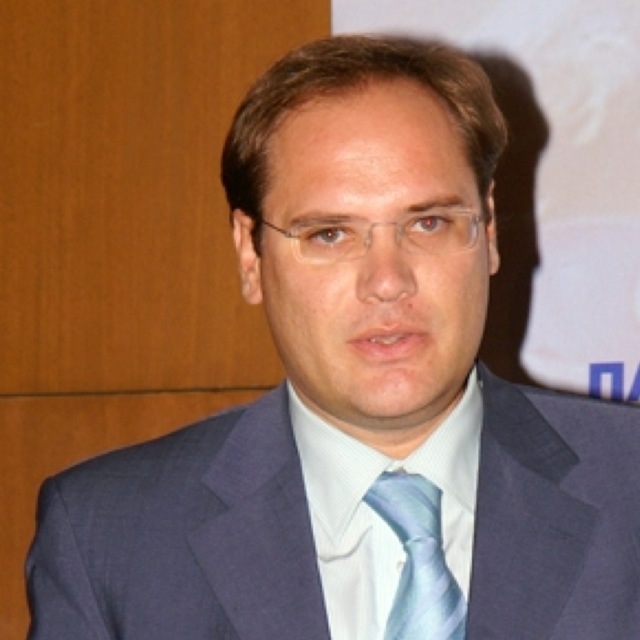
One topic that will change the way we think about optical networks is flexible or elastic optical networks.
Professor Ioannis Tomkos
"If I have to pick one topic that will change the way we think about optical networks, it is flexible or elastic optical networks, and the associated technologies," says Tomkos.
A conventional dense wavelength division multiplexing (DWDM) network has fixed wavelengths. For long-haul optical transmission each wavelength has a fixed bit rate - 10, 40 or 100 Gigabit-per-second (Gbps), a fixed modulation format, and typically occupies a 50GHz channel. "Such a network is very rigid," says Tomkos. "It cannot respond easily to changes in the network's traffic patterns."
This arrangement has come about, says Tomkos, because the assumption has always been that fibre bandwidth is abundant. "But at the moment we are only a factor of two away from reaching the Shannon limit [in terms of spectral efficiency bits/s/Hz) so we are going to hit the fibre capacity wall by 2018-2020," he warns.
The maximum theoretically predicted spectral efficiency for an optical communication system based on standard single-mode fibres is about 9bits/s/Hz per polarisation for typical long-haul system reaches of 500km without regeneration, says Tomkos. "At the moment the most advanced hero experiments demonstrated in labs have achieved a spectral efficiency of about 4-6bits/s/Hz," he says. This equates to a total transmission capacity close to 100 Terabits-per-second (Tbps). After that, deploying more fibre will be the only way to further scale networks.
Accordingly, new thinking is required.
Two approaches are being proposed. One is to treat the optical network in the same way as the air interface in cellular networks: spectrum is scarce and must be used effectively.
"We are running close to fundamental limits, that's why the optical spectrum of available deployed standard single mode fibers should be utilized more efficiently from now on as is the case with wireless spectrum," says Tomkos.
 How optical communication is following in the footsteps of wireless.
The second technique - spatial multiplexing - looks to extend fibre capacity well beyond what can be achieved using the first approach alone. Such an option would need to deploy new fibre types that support multiple cores or multi-mode transmission.
Flexible spectrum
"We have to start thinking about techniques used in wireless networks to be adopted in optical networks," says Tomkos (See text box). With a flexible network, the thinking is to move from the 50GHz fixed grid, down to 12.50GHz, then 6.25GHz or 1.50GHz or even eliminate the ITU grid entirely, he says. Such an approach is dubbed flexible spectrum or a gridless network.
With such an approach, the optical transponders can tune the bit rate and the modulation format according to the reach and capacity requirements. The ROADMs or, more aptly, the wavelength-selective switches (WSSes) on which they are based, also have to support such gridless operation.
WSS vendors Finisar and Nistica already support such a flexible spectrum approach, while JDS Uniphase has just announced it is readying its first products. Meanwhile US operator Verizon is cheerleading the industry to support gridless. "I'm sure Verizon is going to make this happen, as it did at 100 Gigabit," says Tomkos.
Spatial multiplexing
The simplest way to implement spatial multiplexing is to use several fibres in parallel. However, this is not cost-effective. Instead, what is being proposed is to create multi-core fibres - fibres that have more than one core - seven, 19 or more cores in an hexagonal arrangement, down which light can be transmitted. "That will increase the fibre's capacity by a factor of ten of 20," says Tomkos.
Another consideration is to move from single-mode to multi-mode fibre that will support the transmission of multiple modes, as many as several hundred.
The issue with multi-mode fibre is its very high modal dispersion which limits its bandwidth-distance product. "Now with improved techniques from signal processing like MIMO [multiple-input, multiple out] processing, OFDM [orthogonal frequency division multiplexing] to more advanced optical technologies, you can think that all these multiple modes in the fibre can be used potentially as independent channels," says Tomkos. "Therefore you can potentially multiply your fibre capacity by 100x or 200x."
The Proceedings of the IEEE issue will have a paper on flexible networking by NEC Labs, USA, and a second, on the ultimate capacity limits in optical communications, authored by Bell Labs.
Further reading:
MODE-GAP EU Seventh Framework project, click here.
OFC/NFOEC 2012: Technical paper highlights
 Source: The Optical Society
Novel technologies, operators' experiences with state-of-the-art optical deployments and technical papers on topics such as next-generation PON and 400 Gigabit and 1 Terabit optical transmission are some of the highlights of the upcoming OFC/NFOEC conference and exhibition, to be held in Los Angeles from March 4-8, 2012. Here is a taste of some of the technical paper highlights.
Optical networking
In Spectrum, Cost and Energy Efficiency in Fixed-Grid and Flew-Grid Networks (Paper number 1248601) an evaluation of single and multi-carrier networks at rates up to 400 Gigabit-per-second (Gbps) is made by the Athens Information Technology Center. One finding is that efficient spectrum utilisation and fine bit-rate granularity are essential if cost and energy efficiencies are to be realised.
In several invited papers, operators report their experiences with the latest networking technologies. AT&T Labs discusses advanced ROADM networks; NTT details the digital signal processing (DSP) aspects of 100Gbps DWDM systems and, in a separate paper, the challenge for Optical Transport Network (OTN) at 400Gbps and beyond, while Verizon gives an update on the status of MPLS-TP. As part of the invited papers, Finisar's Chris Cole outlines the next-generation CFP modules.
Optical access
Fabrice Bourgart of FT-Orange Labs details where the next generation PON standards - NGPON2 - are going while NeoPhotonics's David Piehler outlines the state of photonic integrated circuit (PIC) technologies for PONS. This is also a topic tackled by Oclaro's Michael Wale: PICs for next-generation optical access systems. Meanwhile Ao Zhang of Fiberhome Telecommunication Technologies discusses the state of FTTH deployments in the world's biggest market, China.
Switching, filtering and interconnect optical devices
NTT has a paper that details a flexible format modulator using a hybrid design based on a planar lightwave circuit (PLC) and lithium niobate. In a separate paper, NTT discusses silica-based PLC transponder aggregators for a colourless, directionless and contentionless ROADM, while Nistica's Tom Strasser discusses gridless ROADMs. Compact thin-film polymer modulators for telecoms is a subject tackled by GigOptix's Raluca Dinu.
One novel paper is on graphene-based optical modulators by Ming Liu, Xiang at the UC Berkeley (Paper Number: 1249064). The optical loss of graphene can be tuned by shifting its Fermi level, he says. The paper shows that such tuning can be used for a high-speed optical modulator at telecom wavelengths.
Optoelectronic Devices
CMOS photonic integrated circuits is the topic discussed by MIT's Rajeev Ram, who outlines a system-on-chip with photonic input and output. Applications range from multiprocessor interconnects to coherent communications (Paper Number: 1249068).
A polarisation-diversity coherent receiver on polymer PLC for QPSK and QAM signals is presented by Thomas Richter of the Fraunhofer Institute for Telecommunications (Paper Number: 1249427). The device has been tested in systems using 16-QAM and QPSK modulation up to 112 Gbps.
Core network
Ciena's Maurice O'Sullivan outlines 400Gbps/ 1Tbps high-spectral efficiency technology and some of the enabling subsystems. Alcatel-Lucent's Steven Korotky discusses traffic trends: drivers and measures of cost-effective and energy-efficient technologies and architectures for the optical backbone networks, while transport requirements for next-generation heterogeneous networks is the subject tackled by Bruce Nelson of Juniper Networks.
Data centre
IBM's Casimir DeCusatis presents a future - 2015-and-beyond - view of data centre optical networking. The data centre is also tackled by HP's Moray McLaren, in his paper on future computing architectures enabled by optical and nanophotonic interconnects. Optically-interconnected data centres are also discussed by Lei Xu of NEC Labs America.
Expanding usable capacity of fibre syposium
There is a special symposium at OFC/ NFOEC entitled Enabling Technologies for Fiber Capacities Beyond 100 Terabits/second. The papers in the symposium discuss MIMO and OFDM, technologies more commonly encountered in the wireless world.