
Building an AI supercomputer using silicon photonics

- Luminous Computing is betting its future on silicon photonics as an enabler for an artificial intelligence (AI) supercomputer
Silicon photonics is now mature enough to be used to design complete systems.
So says Michael Hochberg (pictured), who has been behind four start-ups including Luxtera and Elenion whose products used the technology. Hochberg has also co-authored a book along with Lukas Chrostowski on silicon photonics design.
In the first phase of silicon photonics, from 2000 to 2010, people wondered whether they could even do a design using the technology.
“Almost everything that was being done had to fit into an existing socket that could be served by some other material system,” says Hochberg.
A decade later it was more the case that sockets couldn’t be served without using silicon photonics. “Silicon photonics had dominated every one of the transceiver verticals that matter: intra data centre, data centre interconnect, metro and long haul,” he says.
Now people have started betting their systems using silicon photonics, says Hochberg, citing the examples as lidar, quantum optics, co-packaged optics and biosensing.
Several months ago Hochberg joined as president of Luminous Computing, a start-up that recently came out of stealth mode after raising $105 million in Series A funding.
Luminous is betting its future on silicon photonics as an enabler for an artificial intelligence (AI) supercomputer that it believes will significantly outperform existing platforms.
Machine learning
The vision of AI is to take tasks that were the exclusively the domain of the human mind and automate them at scale, says Hochberg.
Just in the last decade, the AI community has advanced from doing things using machine learning (ML) that are trivial for humans to tasks that only the most talented experts can achieve.
“We have reached the point where machine learning capabilities are superhuman in many respects,” says Hochberg. “Where they produce results quantifiably better than humans can.”
But achieving such machine learning progress has required huge amounts of data and hardware.
“The training runs for the state-of-the-art recommendation engines and natural language models take tens to hundreds of thousands of GPUs (graphics processing units) and they run from months to years,” says Hochberg.
Moreover, the computational demands associated with machine learning training aren’t just doubling every 18 months, like with Moore’s law, but every 3-4 months. “And for memory demands, it is even faster,” he says.
What that means is that the upper limit for doing such training runs are complete data centres.
Luminous Computing wants to develop AI hardware that scales quickly and simply. And a key element of that will be to use silicon photonics to interconnect the hardware.
“One of the central challenges scaling up big clusters is that you have one kind of bus between your CPU and memory, another between your CPU and GPU, another between the GPUs in a box and yet another – Infiniband – between the boxes,” says Hochberg.
These layers of connectivity run at different speeds and latencies that complicate programming for scale. Such systems also result in expensive hardware like GPUs being under-utilised.
“What we are doing is throwing massive optical interconnect at this problem and we are building the system around this optical interconnect,” says Hochberg.
Using sufficient interconnect will enable the computation to scale and will simplify the software. “It is going to be simple to use our system because if you need anything in memory, you just go and get it because there is bandwidth to spare.”
Supercomputing approach
Luminous is not ready to reveal its supercomputer architecture. But the company says it is vertically integrated and is designing the complete system including the processing and interconnect.
When the company started in 2018, it planned to use a photonic processor as the basis of the compute but the class of problems it could solve were deemed insufficiently impactful.
The company then switched to developing a set of ASICs designed around the capabilities of the optics. And it is the optics that rearchitects how data moves within the supercomputer.
“That is the place where you get order-of-magnitude advantages,” says Hochberg.
The architecture will tackle a variety of AI tasks typically undertaken by hyperscalars. “If we can enable them to run models that are bigger than what can be run today while using much smaller programming teams, that has enormous economic impact,” he says.
Hochberg also points out that many organisations want to use machine learning for lots of markets: “They would love to have the ability to train on very large data sets but they don’t have a big distributed systems engineering team to figure out how to scale things up onto big-scale GPUs; that is a market that we want to help.”
The possible customers of Luminous’s system are so keen to access such technology that they are helping Luminous. “That is something I didn’t experience in the optical transceiver world,” quips Hochberg.
The supercomputer will be modular, says Luminous, but its smallest module will have much greater processing capability than, say, a platform hosting 8 or 16 GPUs.
Silicon photonics
Luminous is confident in using silicon photonics to realise its system even though the design will advance how the technology has been used till now.
“You are always making a bet in this space that you can do something that is more complex than anything anyone else is doing because you are going to ship your product a couple of years hence,” says Hochberg
Luminous is has confidence because of the experience of its design team, the design tools it has developed and its understanding of advanced manufacturing processes.
“We have people that know how to stand up complex things,” says Hochberg.
Status
Luminous’s staff is currently around 100, a doubling in the last year. And it is set to double again by year-end.
The company is busy doing modelling work as to how the machine learning algorithms will run on its system. “Not just today’s models but also tomorrow’s models,” says Hochberg.
Meanwhile, there is a huge amount of work to be done to deliver the first hardware by 2024.
“We have a bunch of big complex chips we have to build, we have software that has to live on top of it, and it all has to come together and work,” concludes Hochberg.


Books read in 2021: Part 4
In Part IV, two more industry figures pick their reads.
Michael Hochberg, a silicon photonics expert and currently at a start-up in stealth mode, discusses classical Greek history, while Professor Laura Lechuga, a biosensor luminary highlights Michael Lewis’s excellent book about the pandemic, among others.
Michael Hochberg, President of a stealth-mode start-up
One of the primary ways that I mis-spent my youth was by crawling through my father’s library of social science and history books. This activity generally occurred when I was supposed to be asleep, resting up for a full day of stark and abject boredom in school. This resulted in some perverse outcomes, like my tendency to fall asleep in class at an unusually young age.
It’s accepted practice for college students; certainly, many of the students in my classes during my time as an academic got in some excellent naps. I was always sad to see them leave the comfort of their warm beds to nap in a hard, wooden chair while I lectured; I feel like they would have slept better at home.
Of course, the true masters of napping were the faculty, for whom it was a key technique in committee meetings. But this sort of advanced napping is considerably less common in elementary and middle school, and I suspect that some of my teachers took it personally.
Perhaps the most compelling thing I read during those years was Thucydides’ History of the Peloponnesian War. It’s the history (arguably the first historical volume ever written) of the great conflict between Athens and Sparta. If you’ve never read Pericles’ Funeral Oration, I highly recommend it for anyone who has an interest in leadership; it’s quite possibly the greatest political speech ever given. And there’s a new-ish edition that includes necessary maps, references and explanations, which makes reading and understanding the context dramatically easier. This material makes the text accessible to people who aren’t experts and aren’t reading it as part of a course. It’s even out in paperback!
It’s a volume that I’ve returned to twice, because one of the things that amazes me every time I look at it is how little things have changed in the last 2,500 years. I found myself re-reading it this year and thinking about how much more I got out of it than I did ten years ago; the benefit of experience.
The motivations, actions, and behaviors of the people in Thucydides are instantly and intensely familiar. Given all the changes to technology, government, religion, our knowledge of the universe, access to information, communications, our ideas about ourselves, the triumphs of empiricism and the scientific method, et cetera, it’s amazing to see that the bones of how people behave, both as individuals and as groups, really haven’t changed.
People are still motivated by their desire for security, their interests, and their values (including that sometimes-forgotten motive: honour.) Despite the panoply of innovations, we seem to be basically the same. As a technologist, it’s a thought that gives me both pause and comfort.
Thucydides’ History is told primarily from an Athenian perspective. As I dug deeper, I encountered several books over the years that were truly fascinating, and that gave great insight into the leadership and motivations of the Athenians; I’ve developed a keen interest, starting with this reading, in the circumstances under which democratic regimes can emerge and thrive, both historically and in the present day.
Here are a couple of my favorite further readings on the history of Athens:
- Donald Kagan’s biography of Pericles (Pericles of Athens and the Birth of Democracy); Kagan’s other works are also fascinating reading, as are his lectures from his Yale University history course on the history of Ancient Greece, which are on the web.
- John Hale’s biography of Themistocles and his history of the Athenian navy, The Lords of the Sea.
Because this history of Athens is the story of the rise and fall of a great maritime power, it provides only a limited treatment of Sparta, the foremost territorial power of Ancient Greece.
So, what of the Spartans? The world remembers Leonidas and the 300 at Thermopylae. Students of history remember Plataea, and the later alliance between the Spartans and the Persian Empire directed against Athens. But the Spartans, as a people, remained enigmatic after reading Thucydides, at least to me. What motivated them to create their peculiar society? What were the pressures that shaped their thinking? How did they come to be what they were? Why did they make the decisions that they did?
As Thucydides observed: The Athenians built and left behind immense public works. Temples that still stand today. An extensive literature: comedies, tragedies, and philosophies. Art and sculpture. All the trappings of a commercial, vibrant, creative society. They get to explain themselves to us in their own words. But what of the Spartans, who left behind almost nothing of the sort? We remember their military achievements. But they left behind very little that would allow us to understand them.
To quote Thucydides directly, courtesy of Lapham’s Quarterly (possibly my favourite periodical):
“Suppose that the city of Sparta were to become deserted and that only the temples and foundations of buildings remained: I think that future generations would, as time passed, find it very difficult to believe that the place had really been as powerful as it was represented to be. Yet the Spartans occupy two-fifths of the Peloponnese and stand at the head not only of the whole Peloponnese itself but also of numerous allies beyond its frontiers. Since, however, the city is not regularly planned and contains no temples or monuments of great magnificence, but is simply a collection of villages, in the ancient Hellenic way, its appearance would not come up to expectation. If, on the other hand, the same thing were to happen to Athens, one would conjecture from what met the eye that the city had been twice as powerful as in fact it is.
To address the mystery of the Spartans, Paul Rahe, of Hillsdale College, has written four volumes (thus far) on the history of Spartan strategic thought, and the fifth one will go to press soon.
- The Grand Strategy of Classical Sparta
- The Spartan Regime
- Sparta’s First Attic War
- Sparta’s Second Attic War
These volumes are among the finest books I’ve read. They make the strategic dilemmas and choices of the Spartans as clear as the historical record seems to allow, and where the record is silent, Rahe fills in the blanks with speculation informed by a nuanced understanding of the politics and practices of the day. Rahe has filled in the blank spaces in a way that is remarkable. These books are also utterly readable even to someone like me, who is most decidedly a non-expert in the field.
One of my key takeaways from reading Rahe’s work was the importance of understanding, in detail, the capabilities, motivations, aspirations, and commitments of adversaries, and of having a grand strategy that is simple to articulate, understand and implement.
Only then can a wide range of individuals and organizations coordinate their actions in service of such a grand strategy, which is generally what is required for success, in both business and warfare. The conflict between Athens and Sparta was between a maritime society and a territorial power, and this finds echoes in the current conflicts between the United States and the People’s Republic of China.
In that vein, I’ve been reading Elbridge Colby’s fascinating book (I’m about a third through) on the Strategy of Denial, which I recommend as a thought-provoking work to anyone with an interest in US-China relations. My next reading in this area is Thucydides on Strategy: Grand Strategies in the Peloponnesian War and their Relevance Today.
In recent years, with the revolution in machine learning, we’ve started to develop tools that can do super-human things in areas where humans previously had an absolute monopoly. These tools will allow us to do amazing things that we can barely imagine today, and they will have world-changing economic, military, and social impacts. It’s an incredibly exciting time to be a technologist and to have a chance to participate in this revolution.
Many people believe that these tools will produce fundamental changes in how individual humans behave, in how we organise ourselves into polities, and in how we strategise to enhance our security. Perhaps they’re right. But I don’t think so. The community of technologists have believed that our innovations will change human nature before, and we’ve been wrong before.
I believe that the same motivations that Thucydides articulated so well – Fear, Honor, and Interest – will continue to dominate the landscape. I expect that reading Thucydides will still give deep insight into human nature 500 years from now (assuming of course that anyone is still around to read his work). And 2,500 years of western history seem to suggest, at least to me, that new technology doesn’t fundamentally change human nature, and that to think otherwise is arrogance.
Professor Laura Lechuga, Group Leader NanoBiosensors and Bioanalytical Applications Group, Catalan Institute of Nanoscience and Nanotechnology (ICN2), CSIC, BIST and CIBER-BBN.
I used to read a lot but with our frantic way of living before the pandemic – travelling and working, it was hard to find the time. The pandemic has given me back this habit and I am enjoying it very much.
Here are my best readings of 2021:
The Premonition: A Pandemic Story, by Michael Lewis is an excellent description of the chaotic US public health system and how fighting for political power have corrupted the organisations that should help society in any emergency. The result: the United States has had been one of the countries in pandemic management. A must-read book.
Reina Roja, by Juan Gómez-Jurado, a renowned Spanish author. This is a thriller about the world’s smartest woman on the hunt for a serial killer. I especially like how the protagonist interprets, with a female scientific mind, the actions of the murderer and the staging of the crimes. The book grabs your attention from the first page and continues with a frenetic pace that ends up taking your breath away. I´m not going to disclose the identity of the serial killer …
Acoso by Angela Bernardo is the first book that reveals sexual harassment in Spanish science. The book includes testimonies, interviews with specialists in sexual harassment and compiles the scarce data available in Spain regarding this problem.
The author unravels how the structure of Spanish universities and research centres make its very difficult for female scientists to report and find support when they are victims of sexual harassment or harassment due to gender discrimination.
The Man Who Counted: A Collection of Mathematical Adventures, by Melba Tahan (a pen name), is a well known and classic book in maths by Brazilian writer, Júlio César de Mello e Souz. The book describes curious word problems, mathematics puzzles and curiosities. The protagonist is a thirteenth-century Persian scholar of the Islamic Empire. A must-read book!
My last recommendation is Nosotros, los actogésimos (una novela de mundoochenta), by Jesús Zamora Bonilla. This is a Spanish science fiction book describing “Mundochenta”, a planet 140,000 light years from Earth and its inhabitants, the “eightieths”.
A police and scientific thriller, the book takes place in a very distant future but in a society not yet as technologically advanced as ours. “Mundoachenta” is dominated by the Empire and the Church, which face the challenge of assimilating the increasing scientific advances.
The book is a parody of how power and religion have always tried to stop scientific advances to maintain its dominance.


Elenion unveiled as a silicon photonics PIC company
- Elenion Technologies is making silicon photonics-based photonic integrated circuits
- The company has been active for two and a half years and has products already deployed
A privately-owned silicon photonics company that is already shipping products has dropped its state of secrecy to announce itself. Elenion Technologies is owned by Marlin Equity Partners, the investment firm that also owns systems vendor, Coriant.
“We are in the [optical] engine business,” says Larry Schwerin, CEO of Elenion Technologies. “We are developing a platform leveraging silicon photonics but we have other capabilities.”
 Larry SchwerinElenion’s expertise includes indium phosphide, radio frequency integrated circuits (RFICs), packaging, and driver and control electronics circuit design. The RFIC expertise suggests the company also plans to address the mobility market.
The company will detail its first products prior to the OFC show next March.
Telecom and Datacom
Elenion’s initial focus is the telecom market where its products are already deployed, with Coriant being a likely early customer. “We are also very active in datacom which has a different set of requirements,” says Schwerin.
Telecom is the harder 'trade space' of the two segments, says Schwerin. Telecom designs have to be outside-plant hardened and Telcordia-compliant. “Proving that world is a good place to get started and focussed,” he says.
In contrast, the datacom market has shorter equipment life cycles with optical designs deployed in a more controlled environment. Datacom customers also don't just want pluggables. “They want on-board solutions, parallel solutions, and they request a cost of $1-per-gigabit,” says Schwerin.
The company is targeting optical module makers, systems vendors and the cloud operators
The challenges facing the large-scale data centre operators are multifold: how they drive more bandwidth to the server, how they make the server more effective, how they scale their switching fabric, how they better use their fibre infrastructure and how they meet their optics cost targets.
Elenion says it has detailed data on the construction and costs of data centres and how they will scale. "You need to have that expertise in order to design the platform that they are trying to do today and going forward," says Schwerin. The company is working to deliver an optical engine that will help the data centre operators address the issues of distance, power consumption, space and signal integrity, and which will meet their $1-per-gigabit cost target.
We have developed a set of tools and a set of expertise that lets us design very complex integrated optoelectronic systems at the chip scale
Expertise
Elenion is limited in what it can say until its first products are unveiled. What is clear is that the silicon photonics company has a photonic integrated circuit (PIC) capability that it is using for on-board optics and for pluggable designs such as the CFP2.
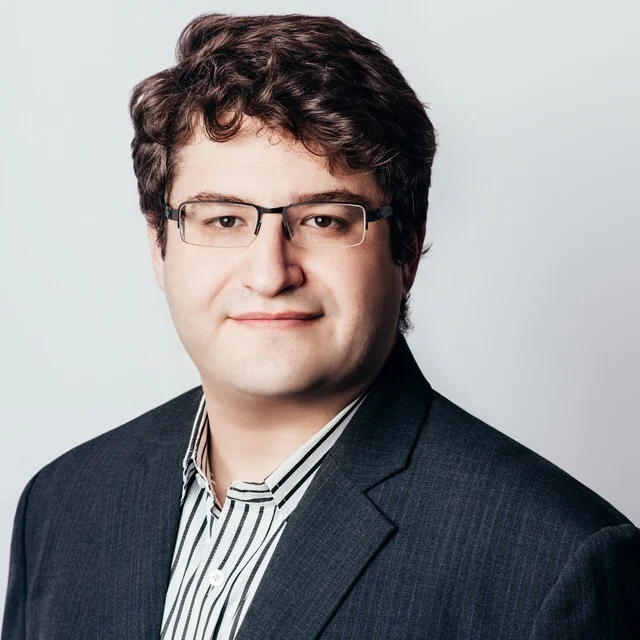 Michael Hochberg
“We have developed a set of tools and a set of expertise that lets us design very complex integrated opto-electronic systems at the chip scale,” says Michael Hochberg, CTO of Elenion.
According to Hochberg, Elenion is pulling complexity out of other systems and putting it into silicon. The value of such PICs is that it avoids having to deploy discrete optics such as lenses. And silicon is the ideal platform for scaling complexity, says Hochberg: “All the areas that we have developed expertise are things that we believe will need to be co-designed with the PIC.”
In the electronics industry, you tape things out and you expect them to work. That is what we are replicating here.
The company says it is building up a capability that has long existed in the semiconductor industry. "In the electronics industry, you tape things out and you expect them to work," says Hochberg. "That is what we are replicating here."
For datacom applications, Schwerin says that in addition to the PIC’s function, the company has developed a wafer-scale approach to packaging. Here, devices are packaged while still on the wafer rather than having to dice the wafer first. “You have got to get into the volumes of millions, not tens or hundreds of thousands,” says Schwerin. “That forces you into that space.”
The company is targeting optical module makers, systems vendors and the cloud operators as customers.
Origins
Schwerin was formerly the CEO of Capella Intelligent Subsystems, a developer of wavelength-selective switch technology, that was sold to Alcatel-Lucent (now Nokia) in 2013.
Hochberg was a director at the Optoelectronic Systems in Silicon (OpSIS) foundry and was a co-founder of silicon photonics company, Luxtera.
The two first met at a conference when Hochberg was running Silicon Lightwave Services (SLS), a silicon photonics design-for-service company. Schwerin became CEO of SLS and the company was bought by Merlin two and a half years ago to become Elenion. The name Elenion means starlight, a nod to J.R.R. Tolkien’s novels.
“We are now introducing ourselves as we are getting enough requests that it seemed the appropriate time,” says Schwerin.
Books in 2015 - Part 2
Yuriy Babenko, senior network architect, Deutsche Telekom
The books I particularly enjoyed in 2015 dealt with creativity, strategy, and social and organisational development.
People working in IT are often right-brained people; we try to make our decisions rationally, verifying hypotheses and build scenarios and strategies. An alternative that challenges this status quo and looks at issues from a different perspective is Thinkertoys by Michael Michalko.
Thinkertoys develops creativity using helpful tools and techniques that show problems in a different light that can help a person stumble unexpectedly on a better solution.
Some of the methods are well known such as mind-mapping and "what if" techniques but there is a bunch of intriguing new approaches. One of my favourites this year, dubbed Clever Trevor, is that specialisation limits our options, whereas many breakthrough ideas come from non-experts in a particular field. It is thus essential to talk to people outside your field and bounce ideas with them. It leads to the surprising realisation that many problems are common across fields.
The book offers a range of practical exercises, so grab them and apply.
I found From Third World to First: The Singapore Story - 1965-2000 by by Lee Kuan Yew, the founder of modern Singapore, inspiring.
Over 700 pages, Mr. Lee describes the country’s journey to ‘create a First World oasis in a Third World region". He never tired to learn, benchmark and optimise. The book offers perspectives on how to stay confident no matter what happens, focus and execute the set strategy; the importance of reputation and established ties, and fact-based reasoning and argumentation.
Lessons can be drawn here for either organisational development or business development in general. You need to know your strengths, focus on them, not rush and become world class in them. To me, there is a direct link to a resource-based approach, or strategic capability analysis here.
The massive Strategy: A History by Lawrence Freeman promises to be the reference book on strategy, strategic history and strategic thinking.
Starting with the origins of strategy including sources such as The Bible, the Greeks and Sun Tzu, the author covers systematically, and with a distinct English touch, the development of strategic thinking. There are no mathematics or decision matrices here, but one is offered comprehensive coverage of relevant authors, thinkers and methods in a historical context.
Thus, for instance, Chapter 30 (yes, there are a lot of chapters) offers an account of the main thinkers of strategic management of the 20th century including Peter Drucker, Kenneth Andrews, Igor Ansoff and Henry Mintzberg.
The book offers a reference for any strategy-related questions, in both personal or business life, with at least 100 pages of annotated, detailed footnotes. I will keep this book alive on my table for months to come.
The last book to highlight is Continuous Delivery by Jez Humble and David Farley.
The book is a complete resource for software delivery in a continuous fashion. Describing the whole lifecycle from initial development, prototyping, testing and finally releasing and operations, the book is a helpful reference in understanding how companies as diverse as Facebook, Google, Netflix, Tesla or Etsy develop and deliver software.
With roots in the Toyota Production System, continuous delivery emphasises empowerment of small teams, the creation of feedback processes, continuous practise, the highest level of automation and repeatability.
Perhaps the most important recommendation is that for a product to be successful, ‘the team succeeds or fails’. Given the levels of ever-rising complexity and specialisation, the recommendation should be taken seriously.
Roy Rubenstein, Gazettabyte
I asked an academic friend to suggest a textbook that he recommends to his students on a subject of interest. Students don’t really read textbooks anymore, he said, they get most of their information from the Internet.
How can this be? Textbooks are the go-to resource to uncover a new topic. But then I was at university before the age of the Internet. His comment also made me wonder if I could do better finding information online.
Two textbooks I got in 2015 concerned silicon photonics. The first, entitled Handbook of Silicon Photonics provides a comprehensive survey of the subject from noted academics involved in this emerging technology. At 800-pages-plus, the volume packs a huge amount of detail. My one complaint with such compilation books is that they tend to promote the work and viewpoints of the contributors. That said, the editors Laurent Vivien and Lorenzo Pavesi have done a good job and while the chapters are specialist, effort is made to retain the reader.
The second silicon photonics book I’d recommend, especially from someone interested in circuit design, is Silicon Photonics Design: From Devices to Systems by Lukas Chrostowski and Michael Hochberg. The book looks at the design and modelling of the key silicon photonics building blocks and assumes the reader is familiar with Matlab and EDA tools. More emphasis is given to the building blocks than systems but the book is important for two reasons: it is neither a textbook nor a compendium of the latest research, and is written for engineers to get them designing. [1]
I also got round to reading a reflective essay by Robert W. Lucky included in a special 100th anniversary edition of the Proceedings of the IEEE magazine, published in 2012. Lucky started his career as an electrical engineer at Bell Labs in 1961. In his piece he talks about the idea of exponential progress and cites Moore’s law. “When I look back on my frame of reference in 1962, I realise that I had no concept of the inevitability of constant change,” he says.
1962 was fertile with potential. Can we say the same about technology today? Lucky doesn’t think so but accepts that maybe such fertility is only evident in retrospect: “We took the low-hanging fruit. I have no idea what is growing further up the tree.”
A common theme of some of the books I read in the last year is storytelling.
I read journalist Barry Newman’s book News to Me: Finding and Writing Colorful Feature Stories that gives advice on writing. Newman has been writing colour pieces for the Wall Street Journal for over four decades: “I’m a machine operator. I bang keys to make words.”
I also recommend Storytelling with Data: A Data Visualization Guide for Business Professionals by Cole Nussbaumer Knaflic about how best to present one’s data.
I discovered Abigail Thomas’s memoirs A Three Dog Life: A Memoir and What Comes Next and How to Like It. She writes beautifully and a chapter of hers may only be a paragraph. Storytelling need not be long.
Three other books I hugely enjoyed were Atul Gawande's Being Mortal: Medicine and What Matters in the End, Roger Cohen’s The Girl from Human Street: A Jewish Family Odyssey and the late Oliver Sacks’ autobiography On the Move: A Life. Sacks was a compulsive writer and made sure he was never far away from a notebook and pen, even when going swimming. A great habit to embrace.
Lastly, if I had to choose one book - a profound work and a book of our age - it is One of Us: The Story of Anders Breivik and the Massacre in Norway by Asne Seierstad.
For Books in 2015 - Part 1, click here
Further Information
[1] There is an online course that includes silicon photonics design, fabrication and data analysis and which uses the book. For details, click here
The quiet period of silicon photonics
Michael Hochberg discusses his book on silicon photonics and the status of the technology. Hochberg is director of R&D at Coriant's Advanced Technology Group. Previously he has been an Associate Professor at the University of Delaware and at the National University of Singapore. He was also a director at the Optoelectronic Systems Integration in Silicon (OpSIS) foundry, and was a co-founder of silicon photonics start-up, Luxtera.
Part 2: An R&D perspective
If you are going to write a book on silicon photonics, you might as well make it different. That is the goal of Michael Hochberg and co-author Lukas Chrostowski, who have published a book on the topic.
 Michael HochbergHochberg says there is no shortage of excellent theoretical textbooks and titles that survey the latest silicon photonics research. Instead, the authors set themselves the goal of creating a design manual to help spur a new generation of designers.
The book aims to provide designers with all the necessary tools and know-how to develop silicon photonics circuits without needing to be specialists in optics.
“One of the limiting factors in terms of the growth and success of the field is how quickly can we breed up more and more designers,” says Hochberg.
The book - Silicon Photonics Design: From Devices to Systems - starts by exploring the main silicon photonics building blocks, from optical waveguides and grating couplers to modulators, photo-detectors and lasers. The book then addresses putting the parts together, with chapters on tools, fabrication, testing and packaging before finishing with system design examples.
The numerical tools used in the book are mostly based on the finite-difference time-domain method, what the authors describe as the typical workhorse in silicon photonics design. Hochberg admits that the systems software tools, in contrast, are less mature: “It is a moving target that will change year to year.”
Myths
Hochberg is also a co-author of a Nature Photonics’ paper, published in 2012, that debunks some of the myths regarding silicon photonics. “We wrote the myths paper after seeing an upswing in the ratio of hype-to-results going on,” says Hochberg.
He says part of the problem was that people were claiming silicon photonics was going to solve problems that it was plainly unsuited to address, for example integrating photonics with cutting-edge ultra-scale sub-micron electronics, for instance at 16 nm and 28 nm nodes. “That is not a practical solution for any near term problem,” says Hochberg.
More recent events, such as Intel’s announcement in February that it is delaying the commercial introduction of its silicon photonics products, highlights how bringing the technology to market is a significant engineering challenge. Instead, we are in a quiet period for silicon photonics, he says. Companies are getting into serious product mode, where they stop publishing and start focussing on building a product.
Moreover, these products - what he refers to as second-generation silicon photonics designs - are increasingly sophisticated with more functions or channels placed on the chip. “It is the standard story of almost any technology in silicon,” he says. “Silicon wins when you can do more stuff on a single chip.”
Silicon photonics and III-V
Hochberg stresses that while it is an understandable desire, it is very hard to compare the performance of silicon photonics as a whole with traditional optical components using III-V compounds. The issue being that silicon photonics comprises many different platforms where designers have made tradeoffs. The same applies to III-V compounds where there are hundreds of processes aimed at thousands of different products. “It is very hard to compare them in a generic way,” he says.
“The great advantage silicon photonics gives you is access to first-rate fabrication infrastructure,” says Hochberg. Silicon photonics offers 8- and 12-inch wafers, high volume foundries, high process control, the ability to ramp to high volumes and achieve high yields of complex-structure designs with hundreds, even thousands of components on-chip.
In contrast, III-V materials such as indium phosphide and gallium arsenide offer higher mobilities - electrons and holes move faster - and, unlike silicon, can straightforwardly emit light.
“The downside is that III-V foundries use technology processes that silicon stopped using 20 to 30 years ago,” says Hochberg. Wafers that are 2-, 3- or 4-inch in diameter, lithography that is ten times coarser than is used for silicon, process controls that are less advanced, and less automation.
If you are going to design a complex chip with lots of different components that require a predictable relationship with each other, this is where silicon tends to beat III-Vs, he says.
But the claim of large silicon wafers and huge volumes is what silicon photonics proponents have been promoting for years, and which has fed some of the false expectation associated with the emerging technology, says one industry analyst.
Hochberg counters by highlighting two trends that play in silicon photonics’ favour.
One is the well-known one of optics slowly replacing copper. This has been going on for 40 to 50 years, he says, in long haul, then in metro and now linking equipment in the data centre. “This will continue for shorter and shorter distances and then, at some point, stop,” he says. That said, Hochberg stresses that there are other applications for silicon photonics besides data communications.
“Just because you run out of opportunities at shorter and shorter reach at some point in the distant future, doesn't mean that the field collapses,” he says. “There's a lot of other cool stuff being done in silicon photonics these days with serious commercial potential.” Example applications include medical and remote sensing.
Once you can do something in silicon and do it adequately well, it tends to displace everything else from the majority of the market
The second trend he highlights is that silicon ends up dominating fields, not necessarily because it is the best choice in terms of performance but because it ends up being so cheap in scale. “Once you can do something in silicon and do it adequately well, it tends to displace everything else from the majority of the market.”
There are up-front costs of getting silicon photonics into a CMOS fab so companies have to be judicious in choosing the applications they tackle. “But once the infrastructure gets going to make a new application, the speed with which the industry can scale is just mind-blowing,” he said.
At Coriant, Hochberg leads a team that is doing advanced R&D. “We are doing advanced research with the goal to develop new technology that may eventually make its way into product.”
Does that include silicon photonics? “There is certainly an interest in silicon photonics; it is one of the things we are exploring,” says Hochberg.
Further reading:
Book: Michael Hochberg and Lukas Chrostowski, Silicon Photonics Design: From Devices to Systems, Cambridge University Press, 2015
Paper: Myths and rumours of silicon photonics, Nature Photonics, Vol 6, April 2012.