

Books in 2019 - Final Part

Gazettabyte asks industry figures each year to cite the memorable books they have read. These include fiction, non-fiction and work-related titles.
In the second and final part, the recommendations during 2019 of Analysys Mason’s Dana Cooperson and Tom Williams from Acacia Communications are included.
Dana Cooperson, Research Director, Analysys Mason
I’ll cheat somewhat and go back several years when picking favourite books and then I’ll focus on titles read in 2019.
I’ve spent a lot of time over the past five years thinking about, helping my kids apply for, and paying for university education, so education-related books have been a focus.
My first recommendation is Excellent Sheep: The Miseducation of the American Elite and the Way to a Meaningful Life, by William Deresiewicz, an ex-professor and admissions counsellor at Yale.
I recommend it for its insight into the college admissions process, the business of US higher education, and how far some parents, prospective students, and colleges stray from what should be the goal: a good education. The recent “Varsity Blues” admissions scandal is a case in point.
The book, read after my first daughter’s run through the admissions obstacle course, validated my cynicism, but also left me and my younger daughter, who read it, empowered for our second attempt.
Three other education-related books offer different accounts of disadvantaged yet determined individuals who overcome challenging circumstances to become well-educated. And how friends and relatives can work to undermine those who strive for more. They also recount how difficult navigating the system can be for the disadvantaged and the crucial role of mentors.
Educated: A Memoir, by Tara Westover and Hillbilly Elegy: A Memoir of a Family and Culture in Crisis, by J. D. Vance, are well-known. These memoirs are insightful about the ‘anti-elite’, anti-education subcultures in the US (in Appalachia and survivalist Idaho, respectively).
Less well-known is A Hope in the Unseen: an American Odyssey from the Inner City to the Ivy League, by journalist Ron Suskind; by far my favourite of the three.
It traces the path of Cedric Jennings, a bright and determined African American boy from a poor, dangerous section of Washington, D.C., in the 1990s as he faces setback after setback in his quest for an education and a better life. It is a wonderfully written and deep book.
Other books gave me engrossing peeks into other eras, cultures, and species.
My 2019 reading started with Homegoing, by Yaa Gyasi, a story of two 18th century Ghanaian half-sisters, one of whom ends up enslaved in Mississippi. This epic novel spans eight generations of the sisters’ families and sheds light on the dark corners of the international slave trade and its legacy.
The central character of Eleanor Oliphant is Completely Fine, by Gail Honeyman, is smart, funny, and cringingly, endearingly quirky. The novel, set in present-day Scotland, has elements of a mystery as we slowly learn the roots of Eleanor’s trauma and just how twisted her psyche has become in her effort to outrun childhood tragedy.
I ended 2019 with A Gentleman in Moscow: A Novel, by Amor Towles. This novel’s plot spans Russian/ Soviet history from the Bolshevik revolution to the Cold War, and yet it unfolds almost entirely in a hotel.
Count Alexander Rostov, the titular protagonist, is an aristocrat whom the Bolsheviks deem a “former person” and sentenced to house arrest in Moscow’s Metropol Hotel. The Count, abetted by various friends and dogged by his chief antagonist, creates a life well-lived despite being a prisoner of the state. Here’s looking at you, Count!
Lastly, the book you didn’t know you needed to read about the species you didn’t know was so fascinating: The Soul of an Octopus: A Surprising Exploration into the Wonder of Consciousness, by journalist Sy Montgomery.
I’m never going to eat octopus again but that is a small price to pay for such an illuminating exposé on the physiology, lifecycle, and intelligence of the octopus; their personalities; and what we can learn about consciousness from a species alien to us.
Tom Williams, Vice President of marketing at Acacia Communications.
It may be a depressing story but the book that most impacted me in 2019 is entitled: What Made Maddy Run, by Kate Fagan.
It is a tragic story about a freshman, Madison Hollaran, at the University of Pennsylvania, who struggled with the pressures of freshman year as a scholarship athlete at an Ivy League school and committed suicide in her second semester.
Maddy seemed to have a perfect life as a star high-school athlete in soccer and track. She had a strong network of high-school friends and a supportive family, but she found herself lost at Penn and couldn’t find her way back to peace in her life.
Her family and close friends knew she was struggling but I don’t think anyone ever imagines events taking such a turn.
Maddy’s family provided the author with full access to her phone, computer and accounts. Stories from family and friends are interspersed with email and text discussions to provide a real sense of the pain she was struggling to communicate. Stitching these different strands together and the benefit of hindsight provide a fuller perspective.
As she approached her final act of desperation, several interactions presented themselves to offer her a different path out of the valley that she found herself in, but somehow she couldn’t recognise these opportunities. She had lost hope.
The book explores the pressures of freshman year, especially at an Ivy League school where students face a level of academic competitiveness never experienced before. Everyone there was at the top of their class in high-school.
In addition, athletes often feel the burden of living up to expectations to “earn” their scholarship. Their sport can become a responsibility or burden and no longer a source of enjoyment.
The book also explores how social media posts can disguise what someone like Maddie is feeling, making it even harder to recognise when a concerning situation has become a crisis.
As a parent of teenage daughters, I felt for her parents who knew she was struggling but didn’t know how to help. As parents, we want to fix our children’s problems, but as they approach adulthood, it is more difficult to have all the answers.
You know from the start how the book will end, but the chapter where she takes her life is as powerful as anything I’ve read. I can’t imagine how difficult it was for her family to provide the access to enable this book to be written, but I respect their strength and I hope it helps others in similar situations.
The book made a lasting impression on me.
Roy Rubenstein, Editor of Gazettabyte
I read some terrific titles in 2019 but none came close to the book What Dementia Teaches Us about Love, by Nicci Gerrard. (In the US, the title is The Last Ocean: A Journey Through Memory and Forgetting)
Gerrard is a journalist and novelist. She is also a co-founder of a campaign in the UK, named after her father, John, to allow carers to accompany dementia patients in hospitals. This follows her experience with her father who was left alone for days without visitors due to a virus outbreak.
Gerrard describes how, “… away from the home he loved, stripped of familiar routines and surrounded by strangers and machines, he swiftly lost his bearings and his fragile hold on himself. There is a great chasm between care and ‘care’, and my father fell into it.”
The book explores the disease – the gradual fragmentation of a person as they lose memory, language, recognition of their surroundings and, inevitability, their health.
But the book is more than that: it is a treatise on what it is to be human. What makes you, you? The grounding of memory and what it means to start forgetting. What is home? And the conflicting demands of caring: preserving the self while being endlessly drawn to caring for a loved one that is slowly losing and being lost.
The book is part memoir and part study. It is also sprinkled with moving human-interest stories. It may be hard to read at times but the book is uplifting.
Gerrard has written an original work on a topic that is not short of literature. Her writing also causes you to pause and reflect on what you’ve read.
For example, she starts the book with a story of how her father, after a decade of dementia, joins the family on a holiday in Sweden and visits a lake.
“My father, old and frail, swam out a few yards and then he started to sing. It is a song I’d never heard before, and never heard since …
“His self – bashed about by the years, picked apart by his dementia – was, in this moment of kindness, beyond language, consciousness and fear, lost and contained in the multiplicity of things and at home in the vast wonder of life.”


Service providers' network planning in need of an overhaul
These are the findings of an operator study conducted by Analysys Mason on behalf of Amdocs, the business and operational support systems (BSS/ OSS) vendor.
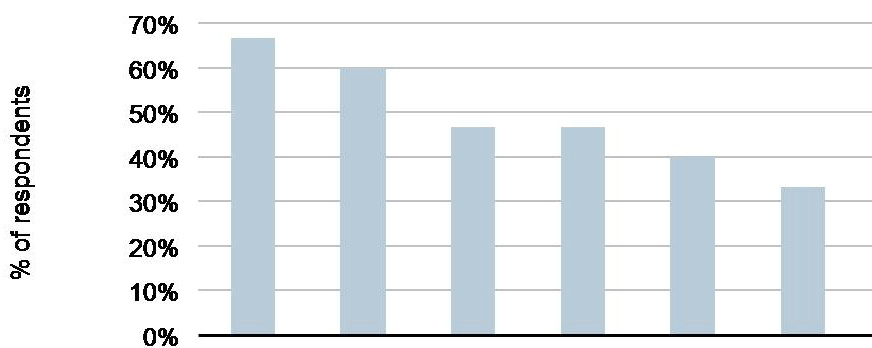 Columns (left to right): 1) Stove-pipe solutions and legacy systems with no time-lined consolidated view 2) Too much time spent on manual processes 3) Too much time (or too little time) and investment on integration efforts with different OSS 4) Lack of consistent processes or tools to roll-out same resources/ technologies 5) Competition difficulties 6) Delays in launching new services. Source: Analysys MasonClick here to view full chart.
What is network planning?
Every service provider has a network planning organisation, connected to engineering but a separate unit. According to Mark Mortensen, senior analyst at Analysys Mason and co-author of the study, the unit typically numbers fewer than 100 staff although BT’s, for example, has 600.
"They are highly technical; you will have a ROADM specialist, radio frequency experts, someone knowledgeable on Juniper and Cisco routers," says Mortensen. "Their job is to figure out how to augment the network using the available budget."
In particular, the unit's tasks include strategic planning, doing ‘what-if’ analyses two years ahead to assess likely demand on the network. Technical planning, meanwhile, includes assessing what needs to be bought in the coming year assuming the budget comes in.
The network planners must also address immediate issues such as when an operator wins a contract and must connect an enterprise’s facilities in locations where the operator has no network presence.

“What operators did in two years of planning five years ago they are now doing in a quarter.”
Mark Mortensen, Analysys Mason.
Network planning issues
- Operators have less time to plan. “What operators did in two years of planning five years ago they are now doing in a quarter,” says Mortensen. “BT wants to be able to run a new plan overnight.”
- Automated and sophisticated planning tools do not exist. The small size of the network planning group has meant OSS vendors’ attention has been focused elsewhere.
- If operators could plan forward orders and traffic with greater confidence, they could reduce the amount of extra-capacity they currently have in place. This, according to Mortensen, could save operators 5% of their capital budget.
Key study findings
- Changes in budgets and networks are happening faster than ever before.
- Network planning is becoming more complex requiring the processing of many data inputs. These include how fast network resources are being consumed, by what services and how quickly the services are growing.
- As a result network planning takes longer than the very changes it needs to accommodate. “It [network planning] is a very manual process,” says Mortensen.
- Marketing people now control the budgets. This makes the network planners’ task more complex and requires interaction between the two groups. “This is not a known art and requires compromise,” he says. Mortensen admits that he was surprised by the degree to which the marketing people now control budgets.
In summary
Even if OSS vendors develop sophisticated network planning tools, it is unlikely that end users will notice a difference, says Mortensen. However, it will impact significantly operators’ efficiencies and competitiveness.
Users will also not be as frustrated when new service are launched, such as the poor network performance that resulted due to the huge increases in data generated by the introduction of the latest smartphones. This change may not be evident to users but will be welcome nonetheless.
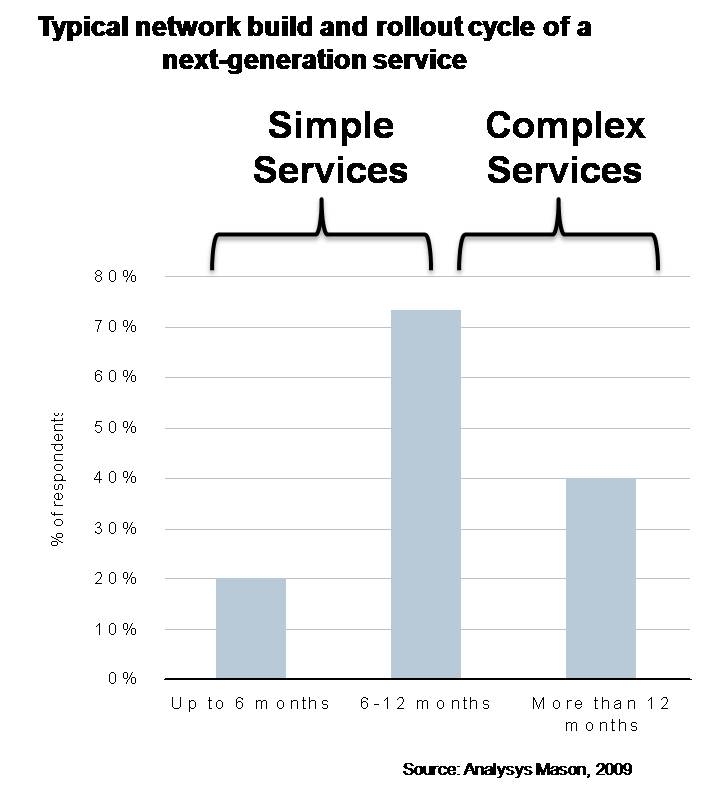
Study details
Analysys Mason interviewed 24 operators including (40%) mobile, (50%) fixed and (10%) cable. A dozen were Tier One operators while two were Tier Three. The rest - Tier Two operators - are classed as having yearly revenues ranging from US$1bn and 10bn. Lastly, half the operators surveyed were European while the rest were split between Asia Pacific and North America. One Latin American operator was also included.
