

A quantum leap in fear
The advent of quantum computing poses a threat which could break open the security systems protecting the world’s financial data and transactions.
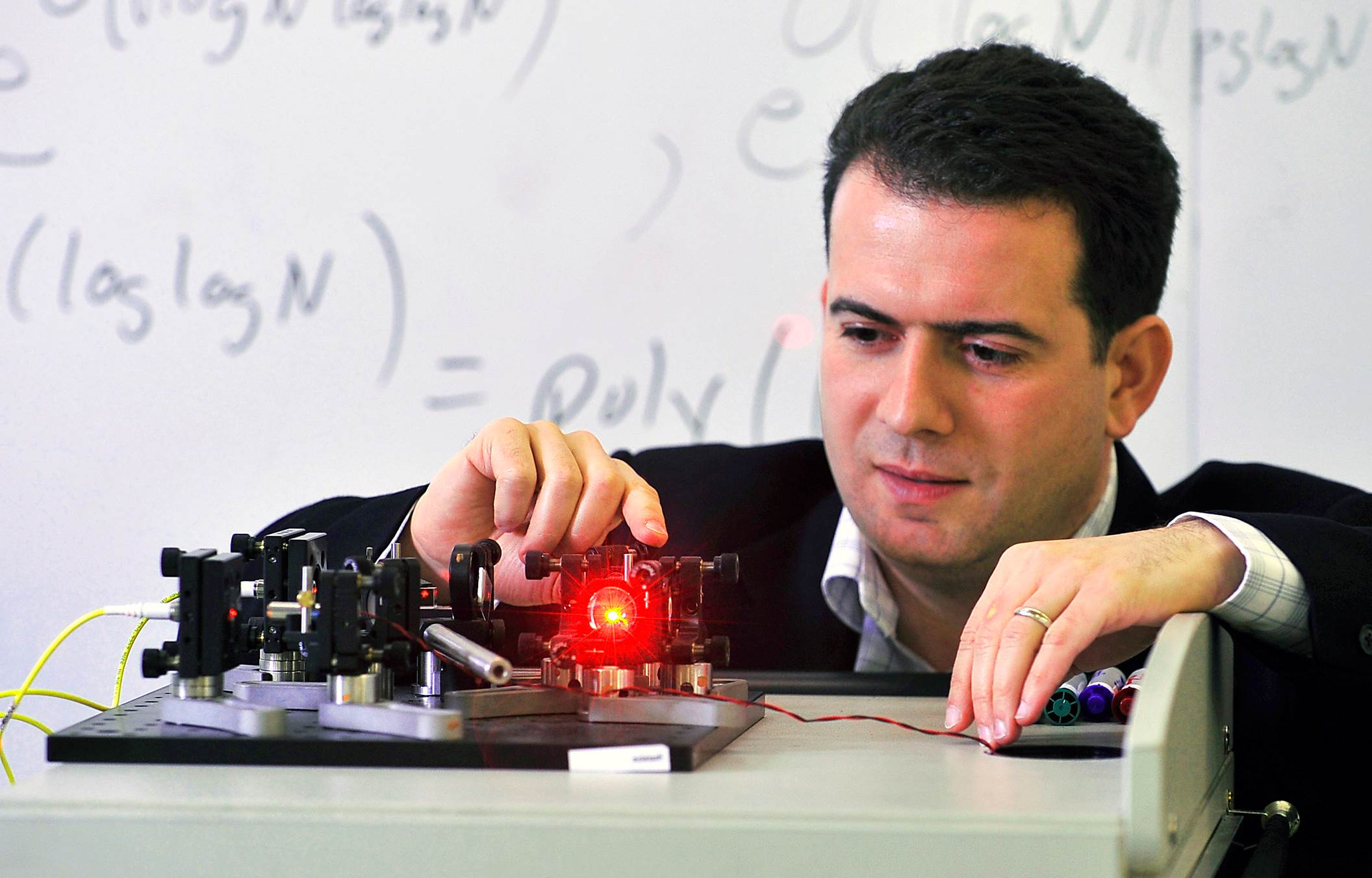 Professor Michele Mosca
Protecting financial data has always been a cat-and-mouse game. What is different now is that the cat could be de-clawed. Quantum computing, a new form of computer processing, promises to break open the security systems that safeguard much of the world’s financial data and transactions.
Quantum computing is expected to be much more powerful than anything currently available because it does not rely on the binary digits 1 or 0 to represent data but exploits the fact that subatomic particles can exist in more than one state at once.
Experts cannot say with certainty when a fully-fledged quantum computer will exist but, once it does, public key encryption schemes in use today will be breakable. Quantum computer algorithms that can crack such schemes have already been put through their paces.
The good news is that cryptographic techniques resilient to quantum computers exist. And while such “quantum-safe” technologies still need to be constructed, security experts agree that financial institutions must prepare now for a quantum-computer world.
Experts cannot say with certainty when a fully-fledged quantum computer will exist but, once it does, public key encryption schemes in use today will be breakable
Ticking clock
There is a 50 percent chance that a quantum computer will exist by 2031, according to Professor Michele Mosca, co-founder of the Institute for Quantum Computing at the University of Waterloo, Canada, and of security company evolutionQ.
A one-in-two chance of a fully working quantum computer by 2031 suggests financial institutions have time to prepare, but that is not the case. Since financial companies are required to keep data confidential for many years, quantum-safe protocols need to be in place for the same length of time that confidentiality is mandated prior to quantum computing. So, for example, if data must be kept confidential for seven years, quantum-safe techniques need to be in place by 2024 at the latest. Otherwise, cyber criminals need only intercept and store RSA-encrypted data after 2024 and wait until 2031 to have a 50-50 chance of access to sensitive information.
Unsurprisingly, replacing public key infrastructure with quantum-safe technology is itself a multi-year project. First, the new systems must be tested and verified to ensure they meet existing requirements – not just that their implementation is secure but that their execution times for various applications are satisfactory. Then, all the public key infrastructure needs to be revamped – a considerable undertaking. This means that, if upgrading infrastructure takes five years, companies should be preparing if quantum computers arrive by 2031.
Professor Renato Renner, the head of the quantum information theory research group at ETH Zurich, the Swiss science and technology university, sees the potential for even more immediate risk. “Having a full-blown quantum computer is not necessarily what you need to break cryptosystems,” he says. In his view, financial companies should be worried that there are already early examples of quantum computers that are stronger than current computers. “It could well be that in five years we have already sufficiently powerful devices that can break RSA cryptosystems,” says Renner.
Quantum-safe approaches
Quantum-safe technologies comprise two approaches, one based on maths and another that exploits the laws of physics.
The maths approach delivers new public key algorithms that are designed to be invulnerable to quantum computing, known as post-quantum or quantum-resistant techniques.
The US National Institute of Science and Technology is taking submissions for post-quantum algorithms with the goal of standardising a suite of protocols by the early to mid-2020s. These include lattice-based, coding-based, isogenies-based and hash-function-based schemes. The maths behind these schemes is complex but the key is that none of them is based on the multiplication of prime numbers and hence susceptible to factoring, which is what quantum computers excel at.
It could well be that in five years we have already sufficiently powerful devices that can break RSA cryptosystems
Nigel Smart, co-founder of Dyadic Security, a software-defined cryptography company, points out that companies are already experimenting with post-quantum lattice schemes. Earlier this year, Google used it in experimental versions of its Chrome browser when talking to its sites. “My betting is that lattice-based systems will win,” says Smart.
The other quantum-safe approach exploits the physics of the very small – quantum mechanics – to secure links so that an eavesdropper on the link cannot steal data. Here particles of light – photons – are used to send the key used to encrypt data (see Cryptosystems – two ways to secure data below) where each photon carries a digital bit of the key.
Financial and other companies that secure data should already be assessing the vulnerabilities of their security systems
Should an adversary eavesdrop with a photodetector and steal the photon, the photon will not arrive at the other end. Should the hacker be more sophisticated and try to measure the photon before sending it on, here they come up against the laws of physics where measuring a photon changes its parameters.
Given these physical properties of photons, the sender and receiver typically reserve at random a number of the key’s photons to detect a potential eavesdropper. If the receiver detects an altered photon, the change suggests the link is compromised.
But quantum key distribution only solves a particular class of problem – for example, protecting data sent across links such as a bank sending information to a data centre for back-up. Moreover, the distances a single photon can travel is a few tens of kilometres. If longer links are needed, intermediate trusted sites are required to regenerate the key, which is expensive and cumbersome.
The technique is also dependent on light and so is not as widely applicable as quantum-resistant techniques. “People are more interested in post-quantum cryptography,” claims Smart.
What now?
BT, working with Toshiba and ADVA Optical Networking, the optical transport equipment maker, has demonstrated a quantum-protected link operating at 100 gigabits-per-second.
What is missing still is a little bit more industrialisation,” says Andrew Lord, head of optical communications at BT. “Quantum physics is pretty sound but we still need to check that the way this is implemented, there are no ways of breaching it.”
 Kelly Richdale
ID Quantique, the Swiss quantum-safe crypto technology company, supplied one early-adopter bank with its quantum key distribution system as far back as 2007. The bank uses a symmetric key scheme coupled with a quantum key.
“You can think of it as adding an additional layer of quantum security on top of everything you already have,” says Kelly Richdale, ID Quantique’s vice-president of quantum-safe security.
“Quantum key distribution has provable security. You know it will be safe against a quantum computer if implemented correctly,” she says. “With post-quantum algorithms, it is a race against time, since in the future there may be new quantum attacks that could render them as vulnerable as RSA.”
Andersen Cheng, chief executive of start-up PQ Solutions, a security company with products including secure communication using post-quantum technology, argues that both quantum- resistant and quantum key distribution will be needed. “You can use both but quantum key distribution on its own is not enough and it is expensive,” he says.
Most organisations do not have a detailed map of where all their information assets are and which business functions rely on which crypto algorithms
What next?
Mosca says that leading financial services companies are aware of the threat posed by quantum computing but their strategies vary: some point to more pressing priorities while others want to know what they can buy now to solve the problem.
He disagrees with both extreme approaches. Financial companies should, in his view, already be assessing the vulnerabilities of their systems. “Most organisations do not have a detailed map of where all their information assets are and which business functions rely on which crypto algorithms,” he says.
Companies should also plan for their systems to change a lot over the next decade. That is why it is premature to settle on a solution now since it will probably need upgrading. And they must test quantum-resistant algorithms. “We don’t have a winner yet,” says Mosca.
Most importantly, financial institutions cannot afford to delay. “Do you really want to be in the catch-up game and hope someone else will solve the problem for you?” asks Mosca.
The article first appeared in the June-July issue of the Financial World, the journal of The London Institute of Banking & Finance, published six times per year in association with the Centre for The Study of Financial Innovation (CSFI).
Cryptosystems – two ways to secure data
To secure data, special digital “keys” are used to scramble the information. Two encryption schemes are used – based on asymmetric and symmetric keys.
Public key cryptography that uses a public and private key pair is an example of an asymmetric scheme. The public key, as implied by the name, is published with the user’s name. Any party wanting to send data securely to the user employs the published public key to scramble the data. Only the recipient, with the associated private key, can decode the sent data. The RSA algorithm is a widely used example. (RSA stands for the initials of the developers: Ron Rivest, Adi Shamir and Leonard Adleman.) A benefit of public key cryptography is that it can be used as a digital signature scheme as well as for protecting data. The downside is that it requires a lot of processing power and is slow even then.
Symmetric schemes, in contrast, are much less demanding to run and use the same key at both link ends to lock and unlock the data. A well-known symmetric key algorithm is the Advanced Encryption Standard, which uses keys up to 256-bits long (AES-256); the more bits, the more secure the encryption.
The issue with the symmetrical scheme is getting the secret key to the recipient without it being compromised. One way is to send a security guard handcuffed to a locked case. A more digital-age approach is to send the secret key over a secure link. Here, public key cryptography can be used; the asymmetric key scheme can be employed to protect the symmetric key transmission prior to secure symmetric communication.
Quantum computing is a potent threat because it undermines both schemes when existing public key cryptography is involved.

BT bolsters research in quantum technologies
BT is increasing its investment in quantum technologies. “We have a whole team of people doing quantum and it is growing really fast,” says Andrew Lord, head of optical communications at BT.
The UK incumbent is working with companies such as Huawei, ADVA Optical Networking and ID Quantique on quantum cryptography, used for secure point-to-point communications. And in February, BT joined the Telecom Infra Project (TIP), and will work with Facebook and other TIP members at BT Labs in Adastral Park and at London’s Tech City. Quantum computing is one early project.
 Andrew LordThe topics of quantum computing and data security are linked. The advent of quantum computers promises the break the encryption schemes securing data today, while developments in quantum cryptography coupled with advances in mathematics promise new schemes resilient to the quantum computer threat.
Securing data transmission
To create a secure link between locations, special digital keys are used to scramble data. Two common data encryption schemes are used, based on symmetric and asymmetric keys.
A common asymmetric key scheme is public key cryptography which uses a public and private key pair that are uniquely related. The public key is published along with its user’s name. Any party wanting to send data securely to the user looks up their public key and uses it to scramble the data. Only the user, which has the associated private key, can unscramble the data. A widely used public-key crypto-system is the RSA algorithm.
There are algorithms that can be run on quantum computers that can crack RSA. Public key crypto has a big question mark over it in the future and anything using public key crypto now also has a question mark over it.
In contrast, symmetric schemes use the same key at both link ends, to lock and unlock the data. A well-known symmetric key algorithm is the Advanced Encryption Standard which uses keys up to 256-bits long (AES-256); the more bits, the more secure the encryption.
The issue with a symmetrical key scheme, however, is getting the key to the recipient without it being compromised. One way is to deliver the secret key using a security guard handcuffed to a case. An approach more befitting the digital age is to send the secret key over a secure link, and here, public key cryptography can be used. In effect, an asymmetric key is used to encrypt the symmetric key for transmission to the destination prior to secure communication.
But what worries governments, enterprises and the financial community is the advent of quantum computing and the risk it poses to cracking public key algorithms which are the predominant way data is secured. Quantum computers are not yet available but government agencies and companies such as Intel, Microsoft and Google are investing in their development and are making progress.
Michele Mosca estimates that there is a 50 percent chance that a quantum computer will exist by 2030. Professor Mosca, co-founder of the Institute for Quantum Computing at the University of Waterloo, Canada and of the security firm, evolutionQ, has a background in cyber security and has researched quantum computing for 20 years.
This is a big deal, says BT’s Lord. “There are algorithms that can be run on quantum computers that can crack RSA,” he says. “Public key crypto has a big question mark over it in the future and anything using public key crypto now also has a question mark over it.”
A one-in-two chance by 2030 suggests companies have time to prepare but that is not the case. Companies need to keep data confidential for a number of years. This means that they need to protect data to the threat of quantum computers at least as many years in advance since cyber-criminals could intercept and cache the data and wait for the advent of quantum computers to crack the coded data.
Upping the game
The need to have secure systems in place years in advance of quantum computer systems is leading security experts and researchers to pursue two approaches to data security. One uses maths while the other is based on quantum physics.
Maths promises new algorithms that are not vulnerable to quantum computing. These are known as post-quantum or quantum-resistant techniques. Several approaches are being researched including lattice-based, coding-based and hash-function-based techniques. But these will take several years to develop. Moreover, such algorithms are deemed secure because they are based on sound maths that is resilient to algorithms run on quantum computers. But equally, they are secure because techniques to break them have not been widely investigated, by researchers and cyber criminals alike.
The second, physics approach uses quantum mechanics for key distribution across an optical link, which is inherently secure.
“Do you pin your hopes on a physics theory [quantum mechanics] that has been around for 100 years or do you base it on maths?” says BT’s Lord. “Or do you do both?”
In the world of the very small, things are linked, even though they are not next to each other
Quantum cryptography
One way to create a secure link is to send the information encoded on photons - particles of light. Here, each photon carries a single bit of the key.
If the adversary steals the photon, it is not received and, equally, they are taking information that is no use to them, says Lord. A more sophisticated technique is to measure the photon while it passes through but here they come up against the quantum mechanical effect where measuring a photon changes its parameters. The transmitter and receiver typically reserve at random a small number of the key’s photons to detect a potential eavesdropper. If the receiver detects photons that were not sent, the change alerts them that the link has been compromised.
The issue with such quantum key distribution techniques is that the distances a single photon can be sent are limited to a few tens of kilometres only. If longer links are needed, intermediate secure trusted sites are used to regenerate the key. These trusted sites need to be secure.
Entanglement, whereby two photons are created such that they are linked even if they are physically in separate locations, is one way researchers are looking to extend the distance keys can be distributed. With such entangled photons, any change or measurement of one instantly affects the twin photon. “In the world of the very small, things are linked, even though they are not next to each other,” says Lord.
Entanglement could be used by quantum repeaters to increase the length possible for key distribution not least for satellites, says Lord: “A lot of work is going on how to put quantum key distribution on orbiting satellites using entanglement.”
But quantum key distribution only solves a particular class of problem such as protecting data sent across links, backing up data between a bank and a data centre, for example. The technique is also dependent on light and thus is not as widely applicable as post-quantum algorithms. "There is a view emerging in the industry that you throw both of these techniques [post quantum algorithms and quantum key distribution] especially at data streams you want to keep secure."
Practicalities
BT working with Toshiba and optical transport equipment maker ADVA Optical Networking have already demonstrated a quantum protected link operating at 100 gigabits-per-second.
BT’s Lord says that while quantum cryptography has been a relatively dormant topic for the last decade, this is now changing. “There are lots of investment around the world and in the UK, with millions poured in by the government,” he says. BT is also encouraged that there are more companies entering the market including Huawei.
“What is missing is still a little bit more industrialisation,” says Lord. “Quantum physics is pretty sound but we still need to check that the way this is implemented, there are no ways of breaching it; to be honest we haven't really done that yet.”
BT says it has spent the last few months talking to financial institutions and claims there is much interest, especially with quantum computing getting much closer to commercialisation. “That is going to force people to make some decisions in the coming years,” says Lord.